Review context, not part of primary text: fictional creative draft; not a customer testimonial.
I deleted another alarm recommendation before I noticed my daughter watching me.
She was holding the permission slip I'd said I'd sign before she left.
"Never mind," she said, folding it back into her bag.
I'm Rachel, and my daughter is Mia.
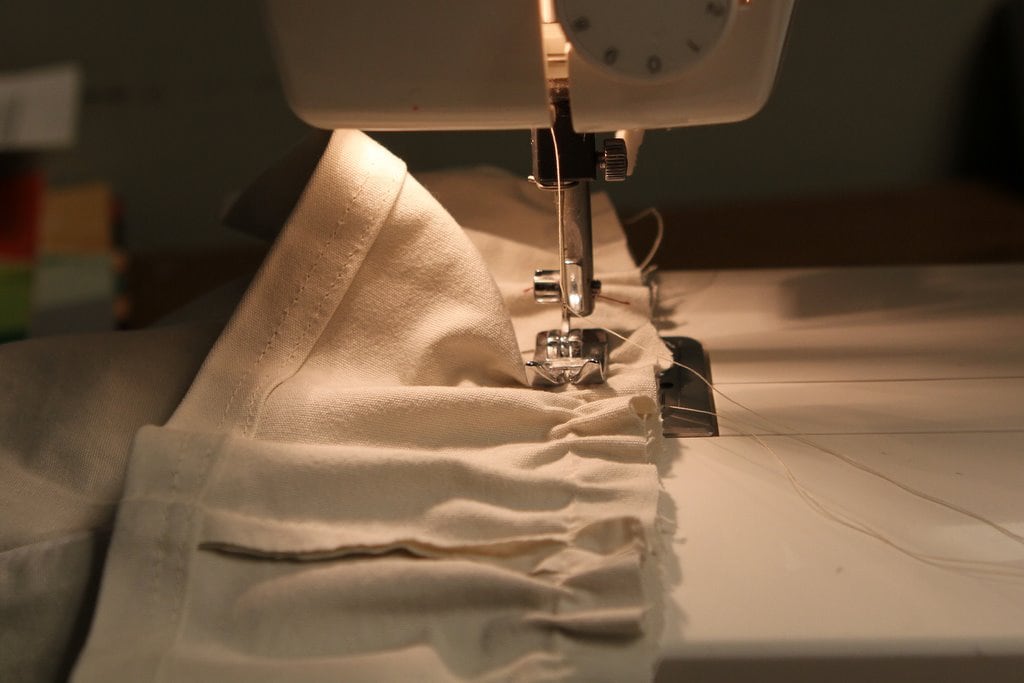
I do alterations from a small room off our kitchen.
Mia used to sit on the floor beside my sewing table after school, handing me pins I hadn't asked for.
Now she brings me dresses she's found secondhand and explains why the sleeves are wrong.
She has opinions about sleeves.
I like hearing them.
Some mornings, though, I barely hear anything from her except "I'm up" and "I said I'm up."
Mia has ADHD, and waking has been a stubborn problem in our house.
She wants time to choose her clothes and eat before she leaves.
Instead, I find myself carrying a slice of toast toward her room while calling her name.
I don't remember deciding that was my job.
It began with giving her a little extra help.
I'd wake her before I started work, leave her to get dressed, then go back when nothing moved.
The next visit took longer.
Then I was standing beside her bed with somebody's half-pinned hem waiting downstairs.
People were kind about suggesting things.
My sister sent a link to a loud clock.
Mia and I listened to the alarm together when it arrived.
She laughed and covered her ears.
"Okay, that is horrible."
We both thought horrible might be useful.
A few mornings later, I heard it over the sewing machine.
When I went upstairs, she was still under the covers.
After that, we tried changing her phone sounds, leaving gaps between alarms, making the next one different from the last.
She chose the sounds.
I stood with her while she checked the times.
There was effort in those evenings.
It was hard to remember that effort when I was calling up the stairs the following morning.
We made the evenings less rushed too.
Her bag was packed earlier, and we protected more time for sleep.
Those were useful changes.
But having everything ready to go hadn't reliably made her awake to use it.
Each recommendation came with a little burst of hope, then an awkward conversation when someone asked how it was going.
I started answering, "We're working on it."
Eventually I stopped opening the links.
That morning, my sister had sent another one.
I swiped it away and said, "I can't do another miracle alarm."
Mia went still beside the table.
I thought she was upset about being rushed again.
Then she said, "You don't have to keep buying things for me."
I told her that wasn't what I meant.
She pulled her bag onto her shoulder.
"I know I'm a lot."
I didn't get the right words out before she left.
For the rest of the morning, I kept finding reasons to look at my phone.
At lunch, I wrote that I wanted to talk after school.
She sent back a thumbs-up.
That small reply hurt more than an argument would have.
When she came home, I was clearing space in the kitchen cupboard.
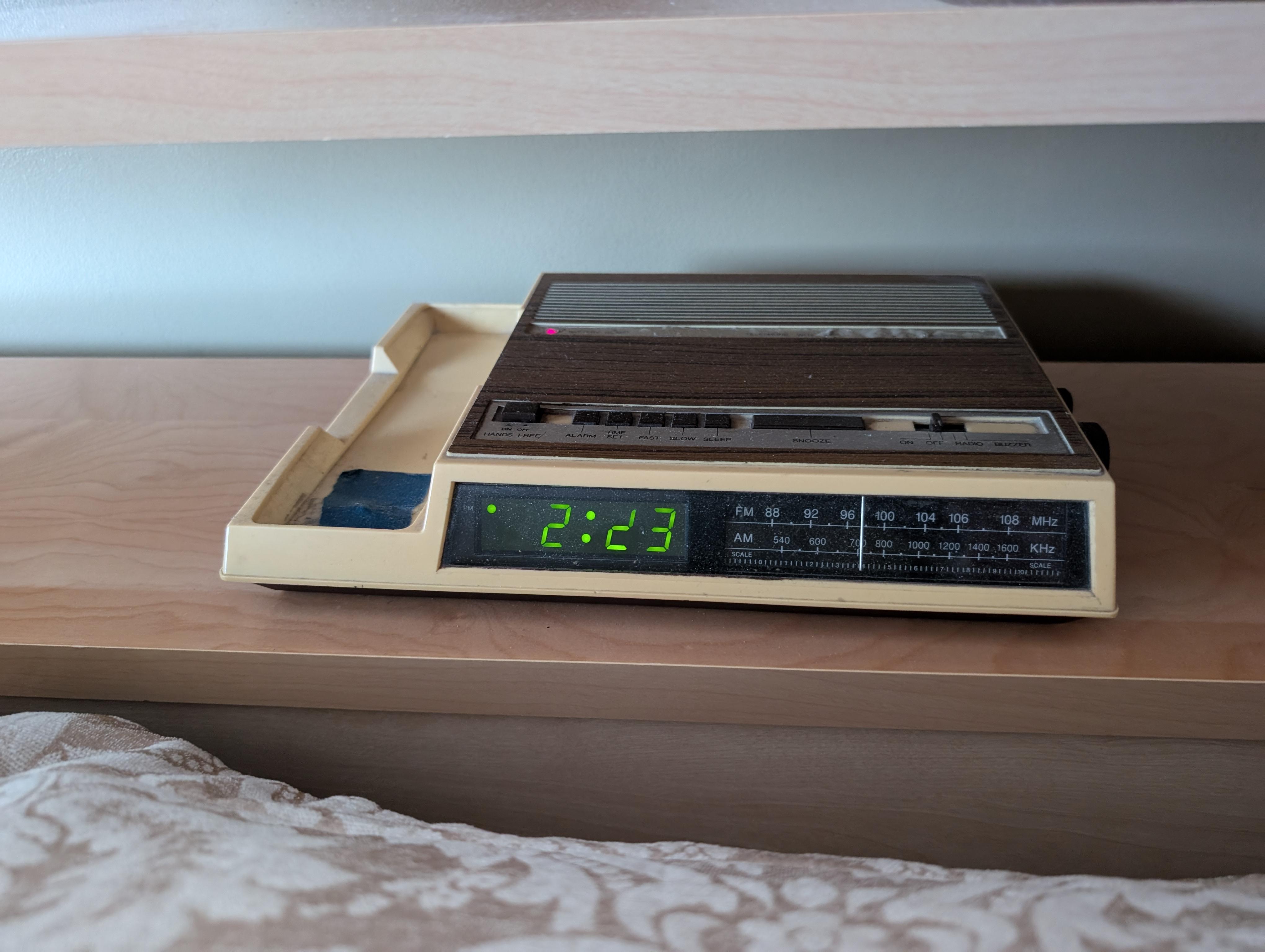
The old clock was in there, caught in its own cable.
Mia sat at the table while I untangled it.
"I was fed up with the things we'd tried," I told her.
"Not with having you."
She rubbed at a mark on the table.
Then she reached for the clock.
"They're all doing the same thing, though."
I asked what she meant.
She pressed its alarm button, stopped it, and pointed toward her phone.
"That makes a noise too."
I'd been counting different purchases as different approaches.
The clock sounded harsher than the phone.
The phone had more alarms than before.
But both depended on her waking to a sound.
When she didn't, I heard it and went upstairs.
It was like changing the ringtone on a call the other person wasn't answering.
A new ringtone was still a call.
Mia pushed the clock back toward me.
"Is there something that doesn't need to be louder?"
I didn't have an answer.
I texted my sister and asked her to send the link again.
This time I wanted Mia sitting there while we looked.
My sister called instead of sending it.
I put her on speaker and set the phone on the table beside the clock.
Mia kept one finger on the cable.
"You're looking at noise," my sister said.
I looked at the clock in my lap.
"It is a clock," I said.
"It makes a sound in the room," she said.
"Who hears it first in your house?"
I didn't have to search for that.
"I do."
Mia's finger stopped moving.
"Then you go up," my sister said.
"Then you're the alarm."
I felt the toast mornings in that sentence.
I had not meant to take that job.
I had taken it anyway.
"So it has to be on me?" Mia asked.
She tapped her own wrist, then put her hand down.
"A cue on the person who needs to get up," my sister said.
"Not another sound for your mom to fetch."
I watched Mia's hand stay in her lap.
Calling up the stairs had been the whole method.
"It's the difference between shouting from the kitchen and tapping someone on the shoulder," my sister said.
"The shout still belongs to whoever is already awake."
I sat with that.
I had been proud of how far my voice carried.
"How do you know a tap wakes anyone?" I asked.
I could hear how tired that sounded.
"I found a published sleep study," my sister said.
"A wearable called Feeltact."
"Not the band on the page I sent you."
Mia looked at me.
I shook my head. I had never heard of it.
"They tested healthy adults," my sister said.
"They didn't only check whether people stirred."
"They asked them to stop the alarm and write down the time."
I pictured an adult sitting up with a pen.
Not a school morning.
Not Mia under the covers.
"That's a different device," I said.
"And adults."
"I know," my sister said.
"I'm not telling you it proves Mia will get up."
"I'm telling you vibration isn't only someone saying their new alarm is wonderful."
That was the first reason I'd heard that didn't come wrapped as a miracle.
Mia turned the clock face down.
"What about me going up?" I asked.
"That's how this started."
"I know it did," my sister said.
"You catching the sound and walking it upstairs answers you noticing."
"It doesn't give her a cue that doesn't need you."
"You became the alarm."
I looked at the half-untangled cable.
I knew that job too well.
"We already bought louder," I said.
I nodded at the clock.
"You did," my sister said.
"Louder still fills a room."
"If she sleeps through it, you still hear it, and you still go up."
"A worse noise isn't a different job."
Mia made a small sound that might have been a laugh.
I didn't.
"What about her phone?" I asked.
"She chose the sounds. We left gaps. I stood there while she set the times."
"That's real work," my sister said.
"It is."
"The phone is still asking her to wake to a sound."
"When she doesn't, you're the one who hears it."
"Different sounds. Same messenger."
I thought of those evenings.
I thought of the mornings after.
"There's fitness watches," I said.
"They vibrate too."
"They can," my sister said.
"A watch buzz is still a reminder on a wrist."
"If it's easy to miss, you're in the doorway again."
"Vibration isn't useful if it still leaves you as the backup plan."
I looked at Mia.
She had opened the page my sister had been talking about.
It showed a wrist alarm.
A band.
The cue sat on the wearer.
The time was set on the band, not in an app I would have to manage.
It said the vibration slowly got stronger.
Mia enlarged the photograph of the black strap.
She didn't look at me for permission.
She looked at the strap, then at her own wrist.
"I'd rather try this than another clock," she said.
I asked her to show me what she meant.
She pointed to the wrist, then to the button on the band.
I stayed beside her and read it again.
The cable was still in my lap.
The old clock was still face down.
"It's called Dawn," my sister said.
We weren't throwing away the packed bag or the earlier bedtime.
We were looking at the waking cue those things hadn't replaced.
Mia opened the Quick Start Guide after that.
Time first, then the alarm, with the button on the band.
Leave it alone to save.
No phone app to hand to me.
"So it gets stronger while it's going?" I asked.
Mia went back over that line with me.
The page said Dawn's motor was three times stronger than the motors in ordinary smartwatches.
That was the maker saying so.
It was not a lab telling us Mia would wake.
She could still stop it and stay in bed.
She needed to want to wear it and get up, which was why I was glad she was choosing.
I was still afraid of another failed purchase.
The 60-night money-back guarantee helped with the money.
It did not tell me how she would respond.
This is the one we looked at: https://dawnbands.com/pages/adhd-teen-alarm
Here's the future I can imagine if Dawn helps Mia wake and get up on her own.
At first, the familiar backup stays in place.
There's a morning when she comes down while I'm still threading the machine.
I nearly ask whether she's packed her bag, then see it over her shoulder.
"Have you got that slip?" I ask instead.
She slides it onto the sewing table, and I sign beside the little crease.
As she handles more of those starts herself, I stop bringing my work to a halt before I've even begun.
She has time to stand in the kitchen and tell me why she's changed her mind about the dress sleeves.
I disagree with her.
She disagrees with me.
It's a pleasant thing to disagree about.
Later in that picture, my first look at the time is about the customer coming to collect her trousers.
Mia has already left with a goodbye from the door.
I haven't spent the morning apologizing for my voice.
Dawn has a 60-night money-back guarantee.
If mornings still end with you doing the waking, take a look at what the band does differently.
I want more room for the conversations Mia used to come downstairs to have.
PS: The sleeves she wants would be a nuisance to sew.
I'd like us to have time to argue about them anyway.
 S01-04