DAWN / REVISED STORY REVIEW / SEPTEMBER 10

Six stories.
Independence, earned.

R2 structural rewrite. Belief / ownership / urgency. Same core desire, not six narrowly qualified avatars.

6 scripts · 2 headlines each · 5 image candidates per script · 30 placements / 26 source photos. Deliberate contextual reuse is identified in the source notes; these are not 30 unique photos.

Reviewed creative drafts, not launch-approved ads. Fictional characters and scenes are disclosed; product futures are imagined, not customer-result evidence. Character/world-building substantially repaired. Original SOP requirements and evidence-dependent functions remain unresolved. See exact review below.

S01 · Belief

S01: What I deleted

Discussion: reviewed with flagsOriginal SOP: not metLaunch: HOLD

Five-image row · 5/5 selected

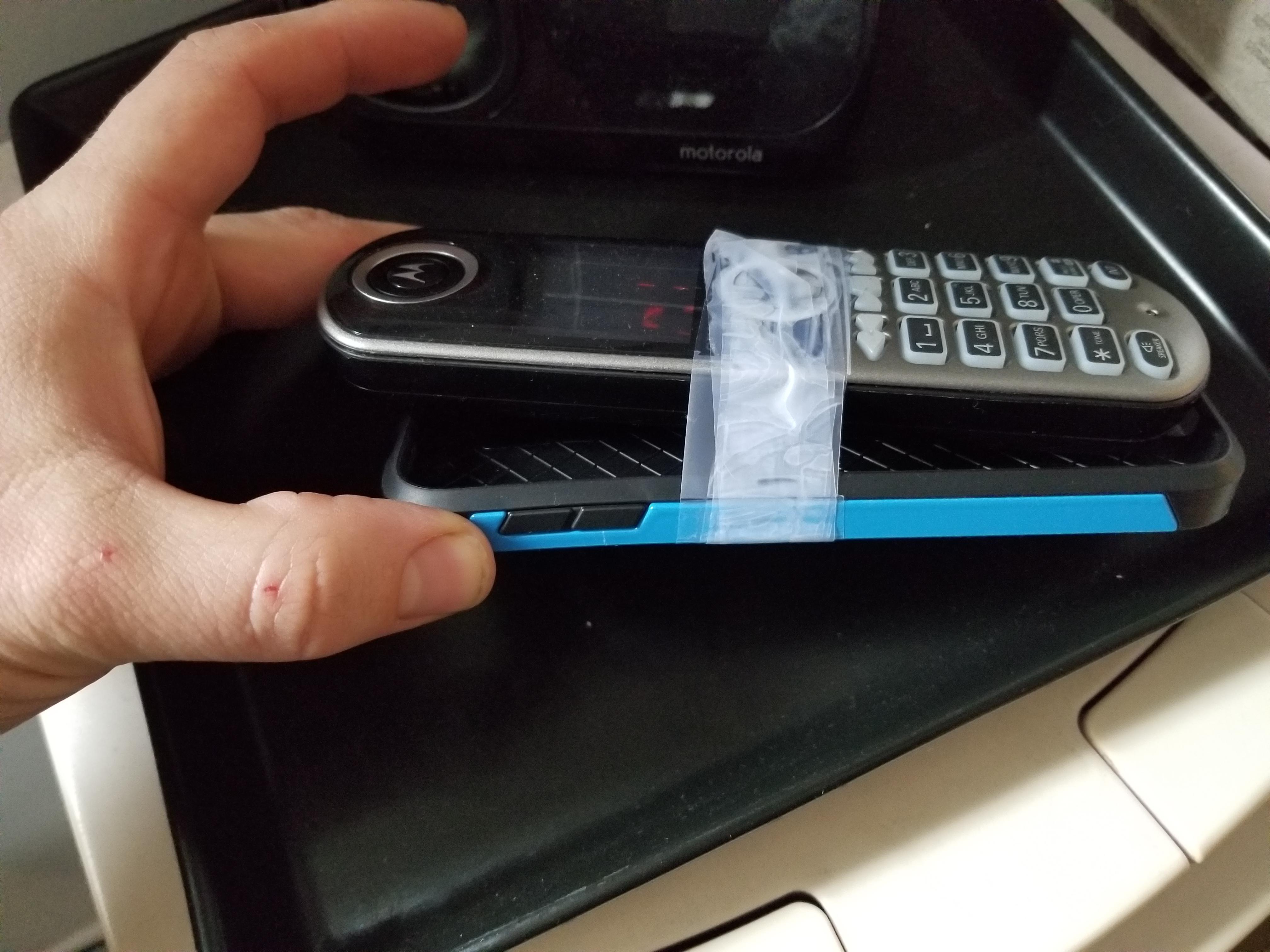
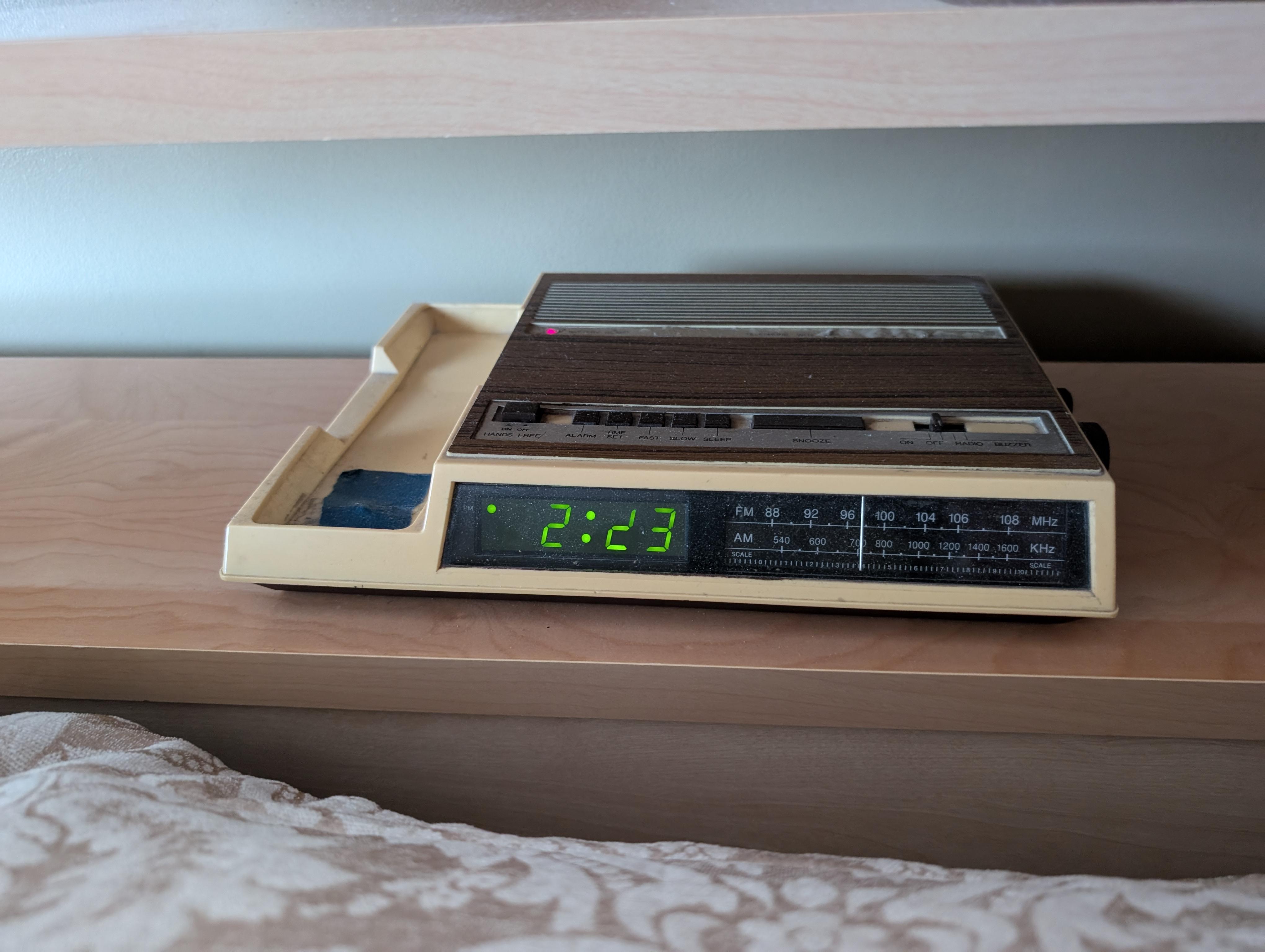
Worn bedside clock radioS01-04

Worn bedside clock radio

Fit / source

Editorial hypothesis, not measured CTR: A parent tired of buying louder alarms may recognize the familiar bedside machine and want to hear why another recommendation could be different.

Contextual sound-alarm control only. Source describes a long-owned clock, not a failed recommendation or failed waking; never characterize it as broken or ineffective.

Source page
Download

Rights unverified · Not narrator/customer evidence

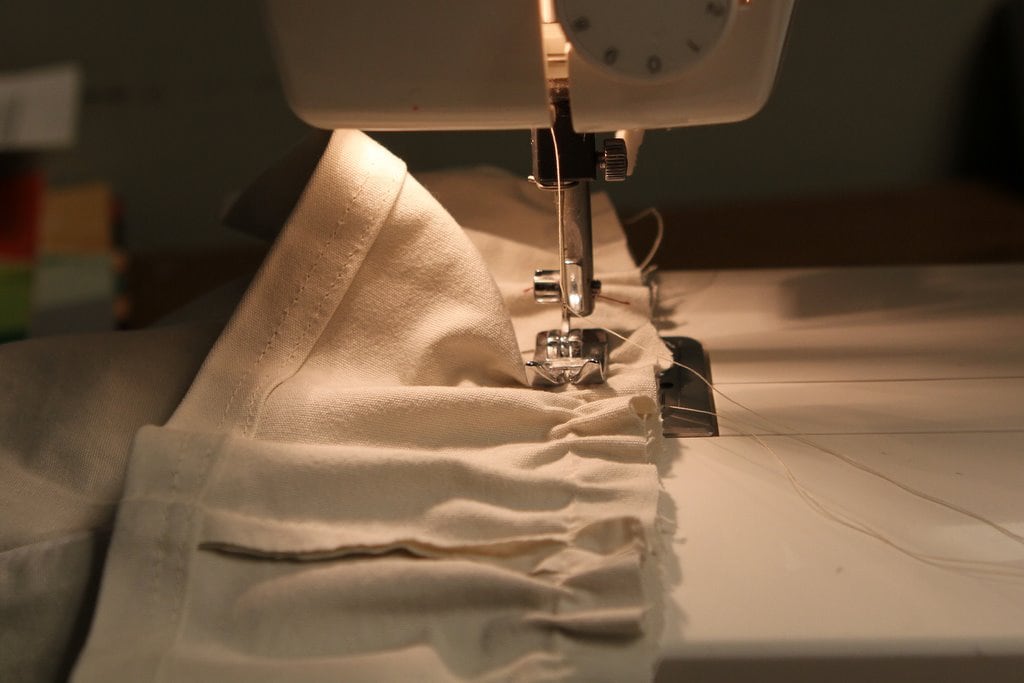
Sewing in progressS01-01

Sewing in progress

Fit / source

Editorial hypothesis, not measured CTR: A parent who misses having time for ordinary shared interests may recognize a sewing project left in progress.

Live article discusses teaching children sewing according to their interests; no claim the pictured project belongs to the fictional family.

Source page
Download

Rights unverified · Not narrator/customer evidence

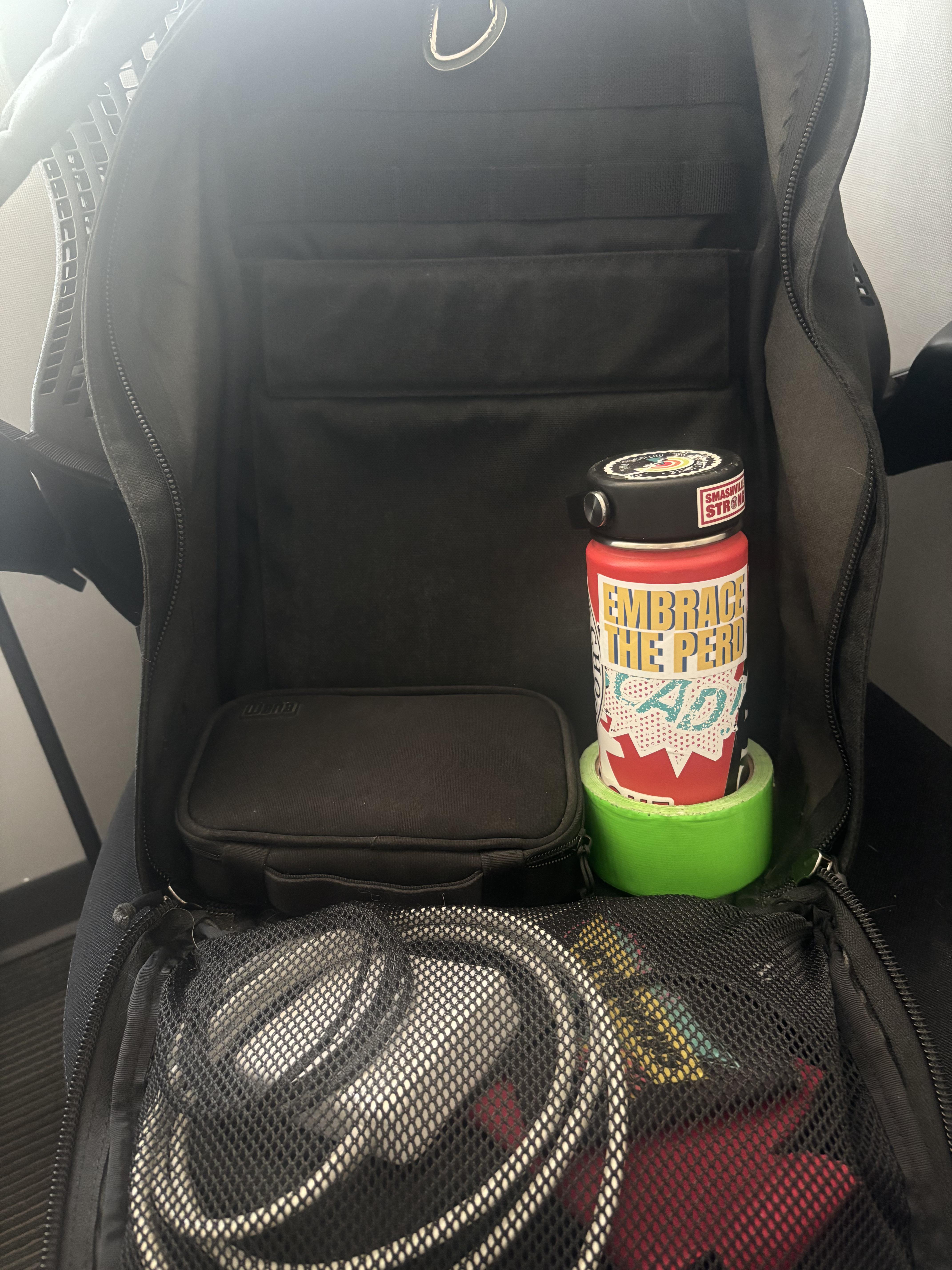
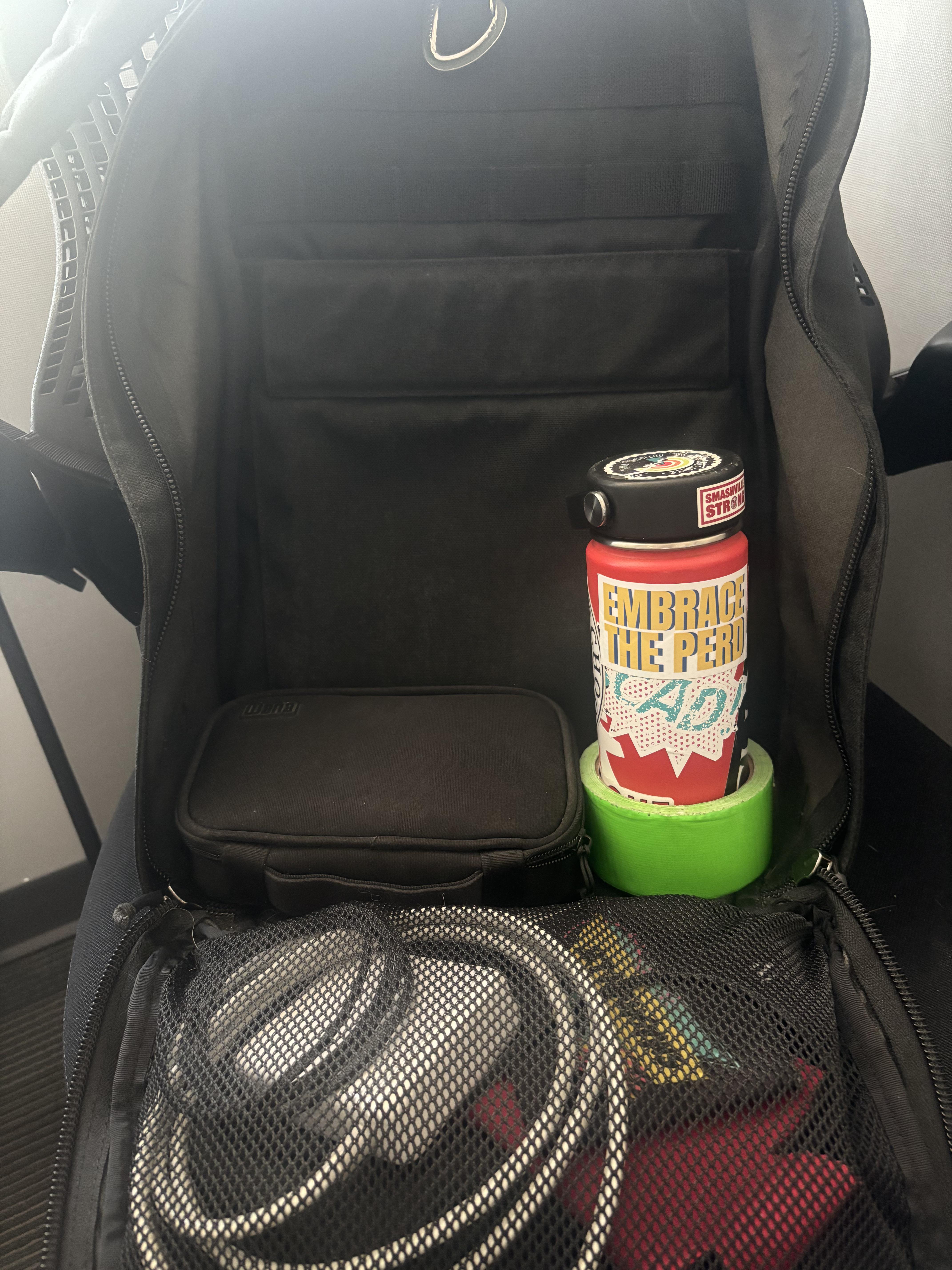
Backpack bottle workaroundS01-05

Backpack bottle workaround

Fit / source

Editorial hypothesis, not measured CTR: A parent trying to hand over morning preparation may recognize a small practical packing fix that someone can own for themselves.

Owner age, parent-child relationship, diagnosis and success are unknown. Deliberate reuse of initial F02 and S03 packing-affinity control; this is preparation, not proof of waking.

Source page
Download

Rights unverified · Not narrator/customer evidence

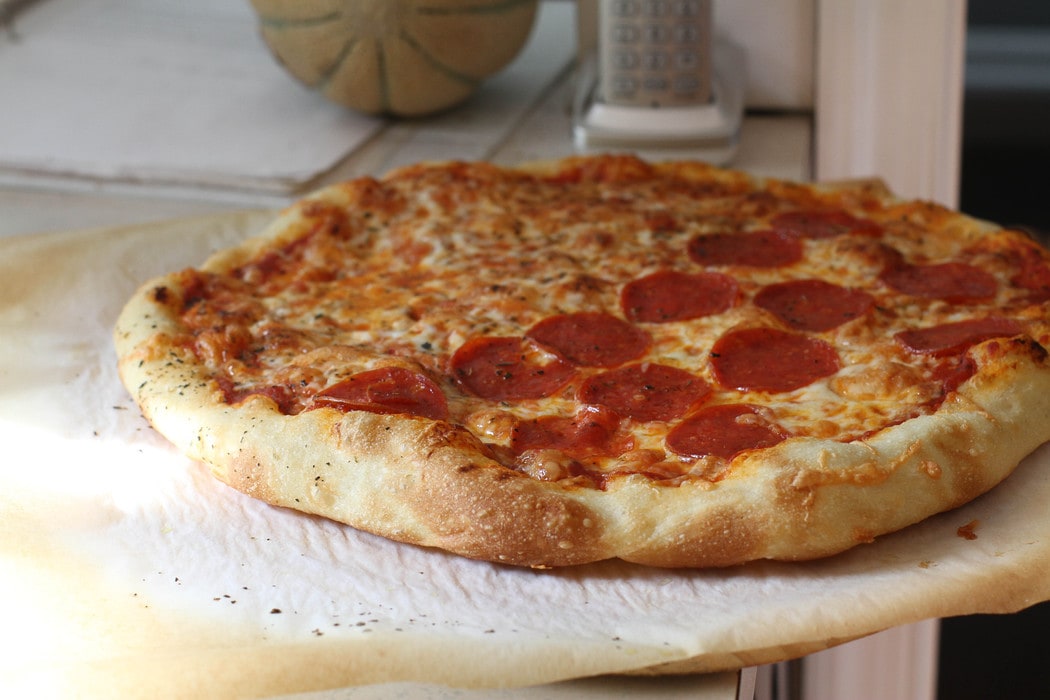
Homemade family pizzaS01-02

Homemade family pizza

Fit / source

Editorial hypothesis, not measured CTR: A parent wanting their child to do more for themselves may enjoy the recognizable pride of a homemade family meal.

Source caption describes a first pizza within a teaching-children-household-skills article. The child-made/first-attempt connection is source-context-dependent, not visible proof.

Source page
Download

Rights unverified · Not narrator/customer evidence

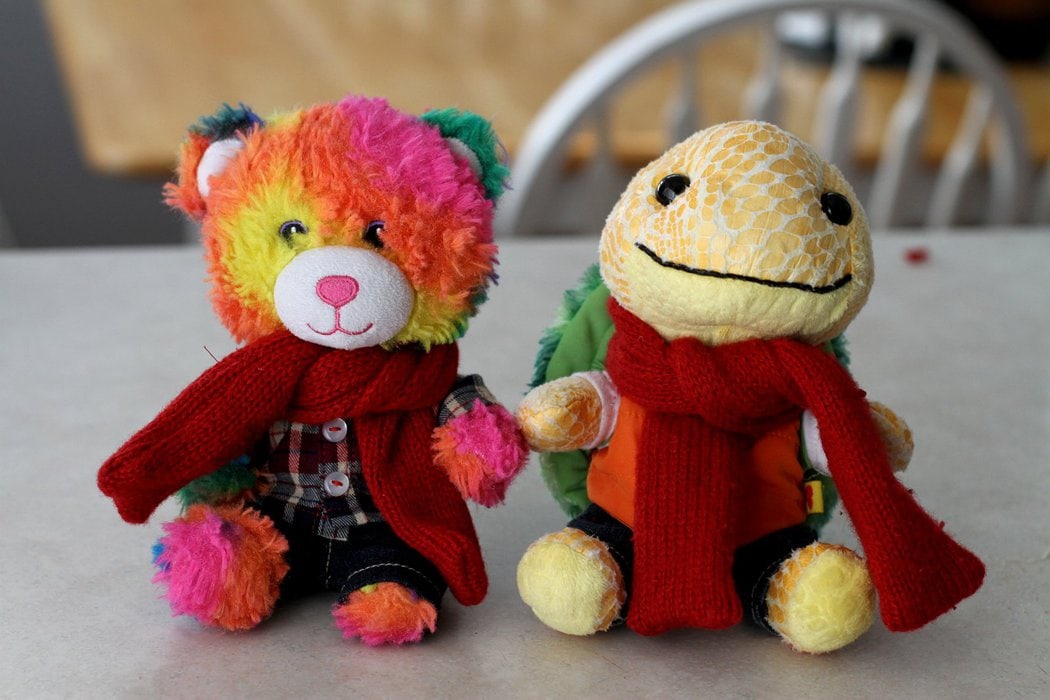
Toys with homemade scarvesS01-03

Toys with homemade scarves

Fit / source

Editorial hypothesis, not measured CTR: A parent missing easy conversations with their child may stop for the affectionate little requests behind homemade clothes for favorite toys.

Live article explains children requested scarves made from an old sweater. Warm relationship control; younger-child-coded objects, not an assertion about the story daughter or eligibility.

Source page
Download

Rights unverified · Not narrator/customer evidence

Headlines

1. I was tired of recommendations, not of her
2. A different clock wasn't a different approach

Primary text

Review context, not part of primary text: fictional creative draft; not a customer testimonial.

I deleted another alarm recommendation before I noticed my daughter watching me.

She was holding the permission slip I'd said I'd sign before she left.

"Never mind," she said, folding it back into her bag.

I'm Rachel, and my daughter is Mia.

I do alterations from a small room off our kitchen.

Mia used to sit on the floor beside my sewing table after school, handing me pins I hadn't asked for.

Now she brings me dresses she's found secondhand and explains why the sleeves are wrong.

She has opinions about sleeves.

I like hearing them.

Some mornings, though, I barely hear anything from her except "I'm up" and "I said I'm up."

Mia has ADHD, and waking has been a stubborn problem in our house.

She wants time to choose her clothes and eat before she leaves.

Instead, I find myself carrying a slice of toast toward her room while calling her name.

I don't remember deciding that was my job.

It began with giving her a little extra help.

I'd wake her before I started work, leave her to get dressed, then go back when nothing moved.

The next visit took longer.

Then I was standing beside her bed with somebody's half-pinned hem waiting downstairs.

People were kind about suggesting things.

My sister sent a link to a loud clock.

Mia and I listened to the alarm together when it arrived.

She laughed and covered her ears.

"Okay, that is horrible."

We both thought horrible might be useful.

A few mornings later, I heard it over the sewing machine.

When I went upstairs, she was still under the covers.

After that, we tried changing her phone sounds, leaving gaps between alarms, making the next one different from the last.

She chose the sounds.

I stood with her while she checked the times.

There was effort in those evenings.

It was hard to remember that effort when I was calling up the stairs the following morning.

We made the evenings less rushed too.

Her bag was packed earlier, and we protected more time for sleep.

Those were useful changes.

But having everything ready to go hadn't reliably made her awake to use it.

Each recommendation came with a little burst of hope, then an awkward conversation when someone asked how it was going.

I started answering, "We're working on it."

Eventually I stopped opening the links.

That morning, my sister had sent another one.

I swiped it away and said, "I can't do another miracle alarm."

Mia went still beside the table.

I thought she was upset about being rushed again.

Then she said, "You don't have to keep buying things for me."

I told her that wasn't what I meant.

She pulled her bag onto her shoulder.

"I know I'm a lot."

I didn't get the right words out before she left.

For the rest of the morning, I kept finding reasons to look at my phone.

At lunch, I wrote that I wanted to talk after school.

She sent back a thumbs-up.

That small reply hurt more than an argument would have.

When she came home, I was clearing space in the kitchen cupboard.

The old clock was in there, caught in its own cable.

Mia sat at the table while I untangled it.

"I was fed up with the things we'd tried," I told her.

"Not with having you."

She rubbed at a mark on the table.

Then she reached for the clock.

"They're all doing the same thing, though."

I asked what she meant.

She pressed its alarm button, stopped it, and pointed toward her phone.

"That makes a noise too."

I'd been counting different purchases as different approaches.

The clock sounded harsher than the phone.

The phone had more alarms than before.

But both depended on her waking to a sound.

When she didn't, I heard it and went upstairs.

It was like changing the ringtone on a call the other person wasn't answering.

A new ringtone was still a call.

Mia pushed the clock back toward me.

"Is there something that doesn't need to be louder?"

That was the question I searched for.

Not the loudest alarm this time.

Alarms that use vibration.

I opened a page about wrist alarms.

I hadn't understood that a wrist alarm puts the vibration against the person wearing it, rather than sending another sound through the bedroom.

"Like the difference between calling me and tapping me?" Mia asked.

"That's the idea I was missing," I said.

We weren't throwing away the earlier bedtime or the packed bag.

We were looking at the waking cue those things hadn't replaced.

I asked about using an ordinary fitness watch.

It was a fair question; watches can have vibrating alarms too.

Then we compared the details of the band in the link my sister had sent.

Its maker said the motor was three times stronger than common smartwatch motors.

The vibration slowly gets stronger until the wearer dismisses it.

That gave me something concrete to compare beyond another person saying, "This one's great."

Mia could still stop it and stay in bed.

She needed to want to wear it and get up, which was why I was glad she was sitting beside me choosing.

She enlarged the photograph of the black silicone strap.

It was adjustable, and the alarm could be set on the band without an app.

"I'd rather try this than another clock," she said.

I asked her to show me what had made her choose it.

She went back to the part about the wrist vibration.

I stayed beside her and read it again.

The band was Dawn Band.

I chose it with her for the wrist cue and the settings she could handle on the band.

Dawn's stated motor strength gave me a reason to choose it over a regular fitness watch.

This is the one we looked at: https://dawnbands.com/pages/adhd-teen-alarm

Here's the future I can imagine if Dawn helps Mia wake and get up on her own.

At first, the familiar backup stays in place.

There's a morning when she comes down while I'm still threading the machine.

I nearly ask whether she's packed her bag, then see it over her shoulder.

"Have you got that slip?" I ask instead.

She slides it onto the sewing table, and I sign beside the little crease.

As she handles more of those starts herself, I stop bringing my work to a halt before I've even begun.

She has time to stand in the kitchen and tell me why she's changed her mind about the dress sleeves.

I disagree with her.

She disagrees with me.

It's a pleasant thing to disagree about.

Later in that picture, my first look at the time is about the customer coming to collect her trousers.

Mia has already left with a goodbye from the door.

I haven't spent the morning apologizing for my voice.

Dawn has a 60-night money-back guarantee.

If mornings still end with you doing the waking, take a look at what the band does differently.

I want more room for the conversations Mia used to come downstairs to have.

PS: The sleeves she wants would be a nuisance to sew.

I'd like us to have time to argue about them anyway.

Writer source notes

S02 · Belief

S02: The morning I couldn't believe

Discussion: reviewed with flagsOriginal SOP: not metLaunch: HOLD

Five-image row · 5/5 selected

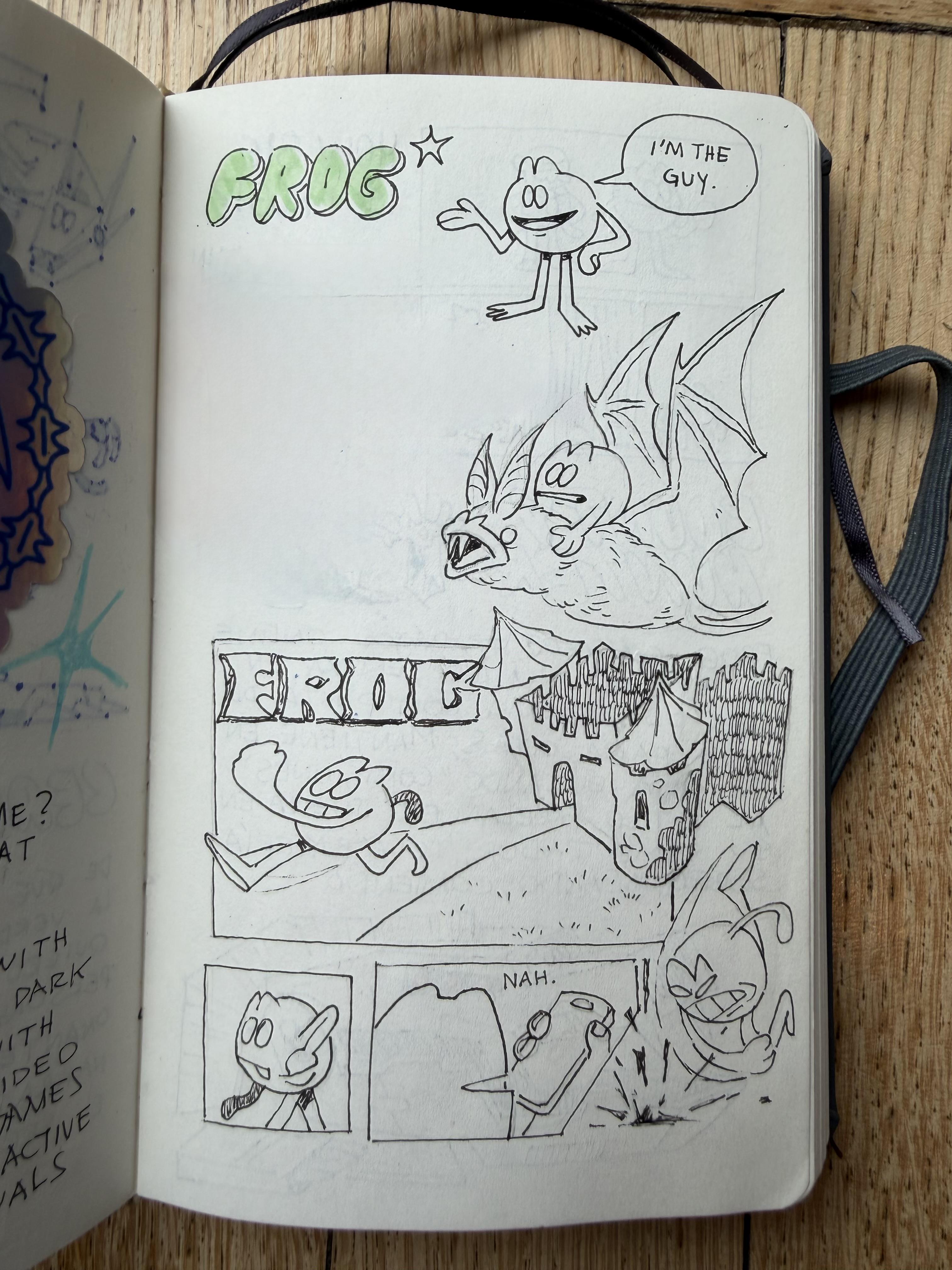
Playful sketchbook hobbyS02-04

Playful sketchbook hobby

Fit / source

Editorial hypothesis, not measured CTR: A parent who misses noticing their child’s humor and creative interests may stop for a page of playful doodles.

Not the fictional daughter’s artwork, not a cat drawing or envelope. Art rights also unverified.

Source page
Download

Rights unverified · Not narrator/customer evidence

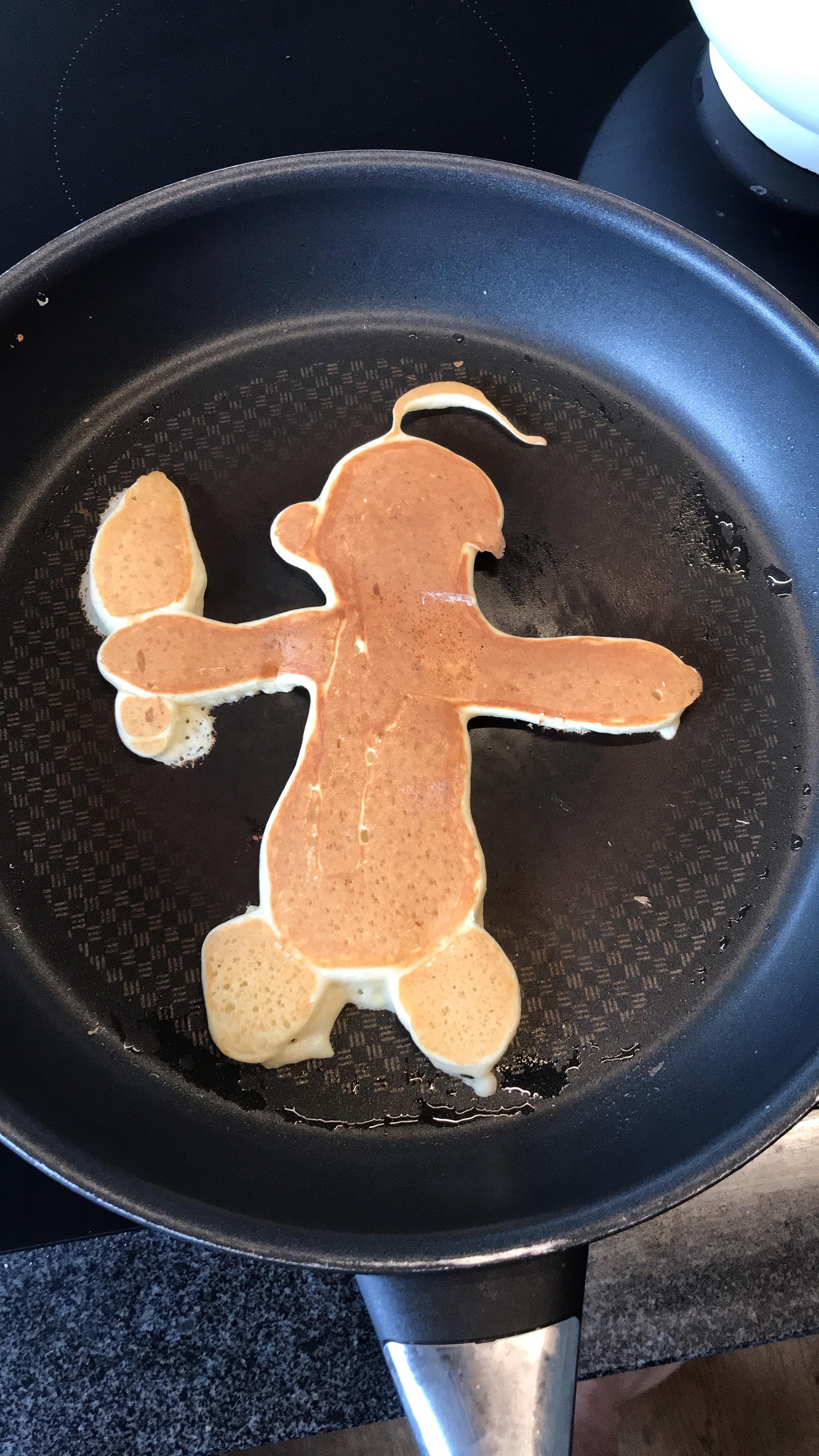
Playful homemade breakfastS02-01

Playful homemade breakfast

Fit / source

Editorial hypothesis, not measured CTR: A parent hoping to recover playful ordinary mornings may recognize the charm of an imperfect character pancake.

Not toast or evidence of a child cooking. Archived title truncated.

Source page
Download

Rights unverified · Not narrator/customer evidence

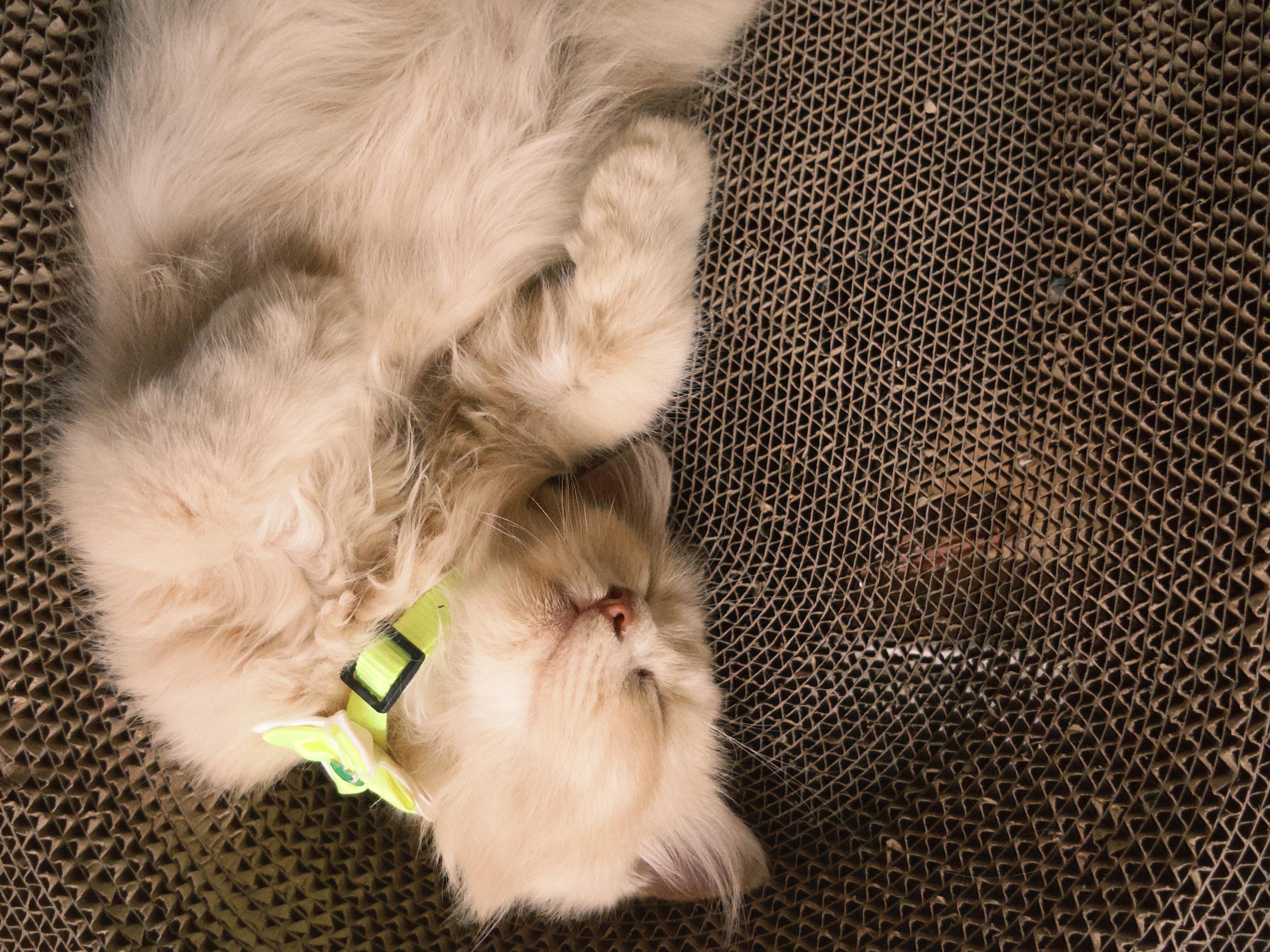
Relaxed household catS02-05

Relaxed household cat

Fit / source

Editorial hypothesis, not measured CTR: A parent wanting more room for the funny, affectionate parts of home life may pause for a deeply relaxed household cat.

Not the fictional family pet; sleep of an animal is not evidence about human waking or a product.

Source page
Download

Rights unverified · Not narrator/customer evidence

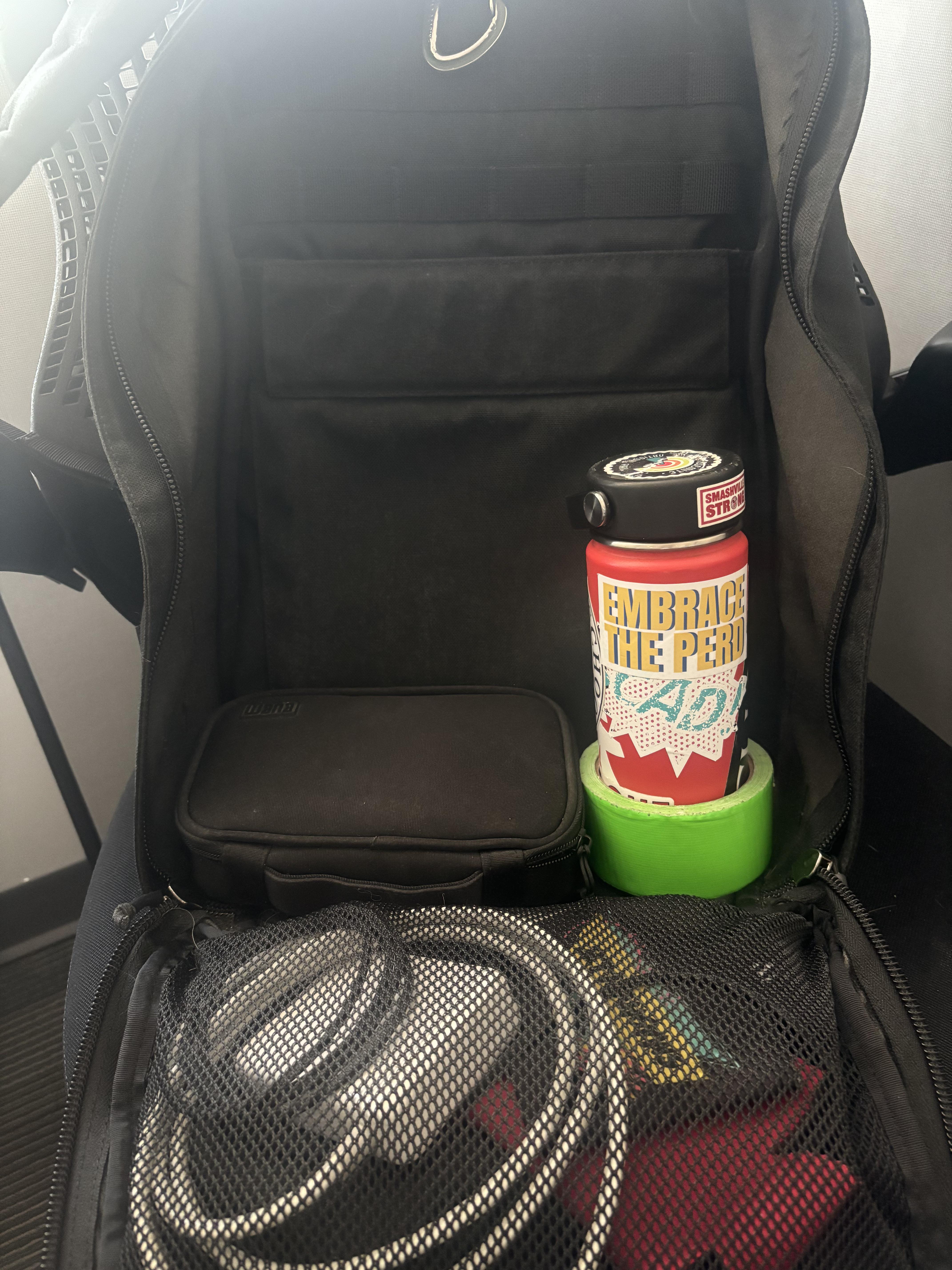
Backpack bottle workaroundS02-03

Backpack bottle workaround

Fit / source

Editorial hypothesis, not measured CTR: A parent who has tried getting everything ready the night before may recognize this small practical bag fix.

Contextual preparation only; organizing a bag does not establish waking independently.

Source page
Download

Rights unverified · Not narrator/customer evidence

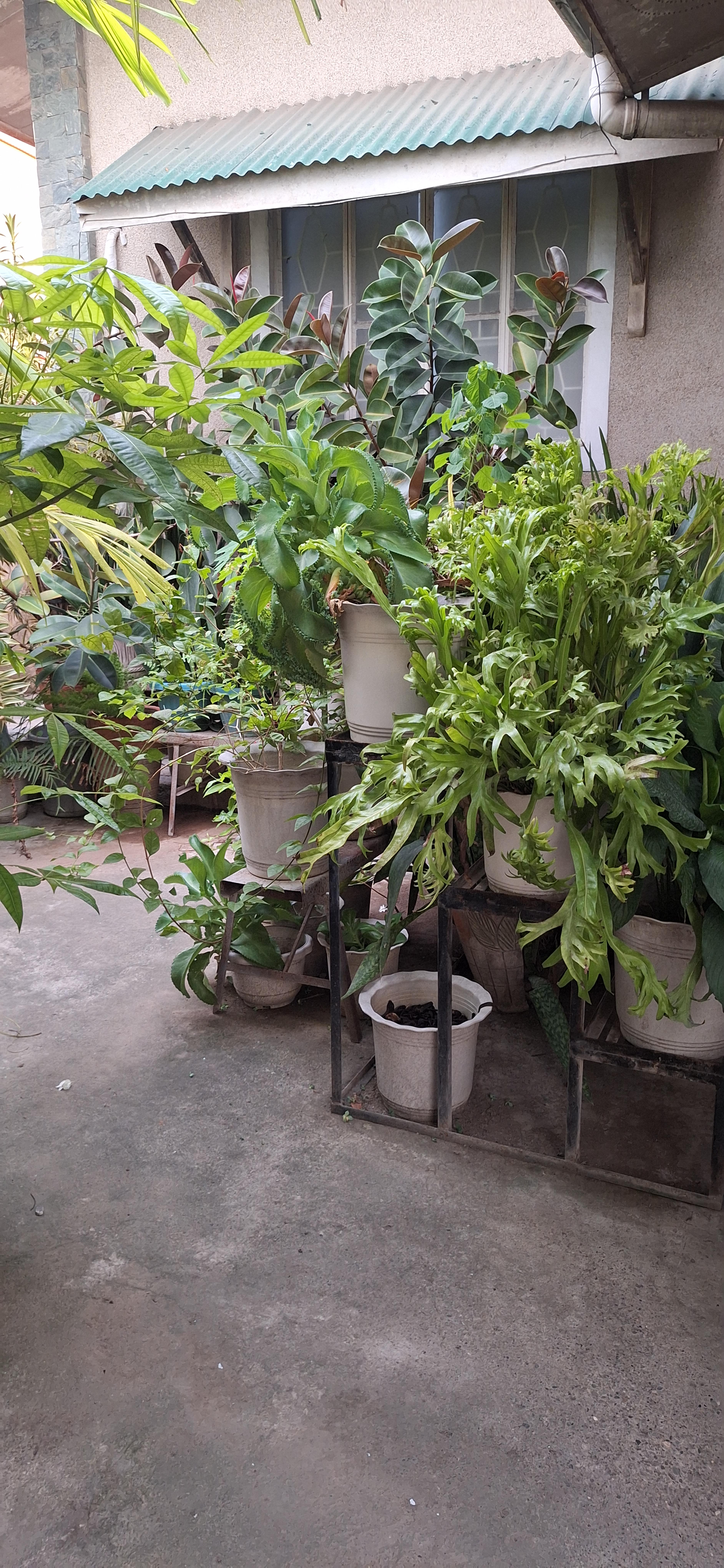
Personal gardening cornerS02-02

Personal gardening corner

Fit / source

Editorial hypothesis, not measured CTR: A parent with interests beyond monitoring mornings may pause for a much-loved plant collection.

Gardening affinity control, not the fictional garden center or proof of a freed morning.

Source page
Download

Rights unverified · Not narrator/customer evidence

Headlines

1. One good morning couldn't undo all that checking
2. When could I stop listening for footsteps?

Primary text

Review context, not part of primary text: fictional creative draft; not a customer testimonial.

My daughter was already dressed, and I still went to check her bed.

She caught me coming back down the hall.

"You saw me, Mom."

I had.

I'd said good morning to her beside the toaster.

Then the house went quiet, and I went to look anyway.

I'm Nina, and my daughter is Ella.

I do the ordering for a small garden center.

Ella draws on every envelope I leave beside the phone, usually a cat with a worse attitude than our actual cat.

She's the person I want beside me on a long car ride.

She notices things, and she makes me laugh.

In the mornings, I mostly noticed whether her bedroom light was on.

Ella has ADHD, and waking up had become the part of the day we both dreaded.

She wanted to do it herself.

At night, that conversation was easy.

She'd set the alarm, tell me she had it, and mean every word.

In the morning, I could hear it ringing while I brushed my teeth.

Sometimes it stopped and she got up.

Sometimes it stopped and she didn't.

That second kind of morning taught me to listen for something else.

A drawer opening.

Water running.

Footsteps that continued past the bathroom instead of returning to bed.

I could be making breakfast and following her around the house in my head.

We moved her phone away from the bed because getting up to stop it seemed sensible.

On one morning she did exactly that.

I told my sister we might have cracked it.

Later that week, I found Ella back under the covers with the phone beside her.

We tried a louder alarm after that.

It made me jump in the next room.

She still needed me to come in.

I stopped telling my sister about new ideas.

Even when something went well, I waited for the catch.

Getting things ready before bed helped with the scramble afterward.

Ella could find her clothes.

Her lunch didn't need assembling while we watched the clock.

But an organized bag by the door didn't tell me whether she'd leave her bed.

Eventually, a sleepy "I'm up" started sounding like something I needed to verify.

I hated that.

I wasn't trying to catch her out.

I was trying to keep a hard morning from turning into a late one.

Then came the morning she caught me checking an empty bed.

Ella stood in the hall with her hair tied back, holding the toast she'd already made.

"When I do get up, do you even notice?"

That was worse than an argument.

I could have listed all the times I'd needed to go back.

But she wasn't asking about those mornings.

She was asking about this one.

"Yes," I said.

"I'm having trouble trusting that tomorrow will be like today."

She looked down at her plate.

"Me too."

I'd thought we were on opposite sides of this.

She didn't know what made the good mornings different either.

That evening, Ella brought her phone to the table.

She scrolled through the alarm times we'd added, moved and abandoned.

It looked like a record of every hopeful conversation we'd had.

"Could we stop changing everything at once?" she asked.

We talked through what actually happened after an alarm.

The sound went off.

Sometimes she heard it; sometimes I was the first person to respond.

Even hearing it wasn't always the same as staying up.

"Moving the phone helped you get out of bed that day," I said.

"Then I brought it back."

She didn't say it defiantly.

She was remembering.

I realized I'd treated reaching the phone, waking up and starting the day as one event.

We'd been trying to solve all of it by rearranging the sound.

Ella pushed her sleeve up.

"Is there an alarm you can feel?"

We searched that question together.

Bed shakers appeared alongside wrist alarms.

I could understand the appeal of something under the pillow, especially for someone who wouldn't sleep in a band.

Ella wanted to look at the wrist ones first.

She held her arm out while I read the descriptions.

The idea was easy to picture: instead of sound coming from a phone across the room, a band vibrates against the wrist.

A different place for the signal to arrive.

"Like someone tapping you instead of calling you?" she asked.

"That kind of difference, yes."

I went back to the controls and alarm description.

This particular band didn't depend on a single fixed-strength watch alert.

Its vibration slowly gets stronger until the wearer dismisses it.

Ella asked whether dismissing it meant she had to stand up.

It didn't.

"Then putting my feet down still has to be my part."

That was more useful than another promise to try harder.

We could separate what a tool did from what she wanted to do next.

The alarm could give her a physical cue.

Getting out of bed was still hers.

And my trust wasn't something either of us could switch on at bedtime.

It would have to come from more ordinary mornings going well.

I compared the wrist option with a regular fitness tracker.

This wasn't a case of finding the most features.

The company said its alarm motor was three times stronger than common smartwatch motors.

The alarm time was set on the band, without an app.

She wouldn't need her phone beside the bed to use it.

I looked at the adjustable silicone strap, then at her wrist.

"Would you want to sleep in it?"

She wanted to try.

The other detail I kept returning to was the 60-night money-back guarantee.

After all our hopeful first mornings, having more than one morning to decide mattered to me.

That combination made Dawn the one I wanted us to choose.

Here's the band we were looking at: https://dawnbands.com/pages/adhd-teen-alarm

I'd keep a backup while we learned how she responded.

The future I picture, if Dawn helps Ella get up consistently, is mostly about what stops happening in my head.

The first good morning, I'd probably still stand in the kitchen listening.

She'd appear with her hair tied back, and I'd feel pleased and nervous at the same time.

I wouldn't phone my sister with an announcement.

Over the following mornings, I'd start leaving small things unfinished in my listening routine.

I'd hear a drawer open and carry on cutting my toast.

I'd stop waiting for the next noise before sitting down.

After enough mornings of Ella handling it, a quiet hallway would begin to mean she was busy, instead of making me put down my plate.

And then I picture an ordinary day when she passes the kitchen in her coat.

I look up from an envelope she's drawn on.

There's a cat wearing a tiny crown.

"Is that supposed to be me?"

"Depends if you're being nice."

I'd laugh, and she'd lean over to steal a corner of my toast.

Only after she left would I notice that I hadn't gone near her room.

That's the change I want time to believe in.

Not a celebration Ella has to keep earning every single morning.

Enough steadiness that we can talk about the cat.

If you still find yourself listening after the alarm stops, take a look at Dawn with your child.

You don't have to pretend one good morning erases the hard ones.

You can look for a different way forward without asking either of you to trust it overnight.

P.S. On the morning Ella caught me, I went back to the kitchen with her.

I told her I had noticed.

I should have said it before I checked the bed.

Writer source notes
- **KEEP / IMPROVE / CHANGE / GAP:** Keep empty-bed hook, daughter's successful pre-product morning, skepticism about consistency, independence desire. Restore Nina/Ella and a relationship beyond waking. Replace Facebook doubt recital with an alarm-history reconstruction and daughter's physical-cue question; distinct progression concerns maternal listening, not setup ownership. Gap: no sourced durable Dawn effectiveness or achieved timeline.
- **Fiction boundary:** Primary disclosure covers all names, garden-center work, drawings, old-alarm events and dialogue. Opening good morning is pre-product, not Dawn success. Imagined passage starts “The future I picture, if Dawn helps Ella get up consistently”; no purchase or retrospective Dawn result is asserted. PS returns explicitly to the fictional opening morning.
- **Mechanism scope:** Distinguishes hearing/stopping alarm from getting up; sound changes previously left mother verifying; wrist vibration is different delivery, not a medical root cause. Slowly strengthening cue explained before reveal; child acknowledges dismissibility. More independent mornings, not anti-habituation theory, are the basis for imagined trust.
- **Differentiation:** Child-led selection among physical-cue categories; wrist preference does not disparage bed shakers. Owner-confirmed stronger motor versus common trackers, on-band setup and 60-night guarantee answer distinct choice/consistency concerns. Guarantee is not evidence of reliable waking.
- **Evidence-dependent SOP exceptions:** No authenticated expert dialogue, exclusive biological root-cause solution or achieved week-by-week results. Ordinary relationship incident replaces catastrophe; original scale/reveal criteria remain measured flags, not silently waived. Exact function map and metrics in writer-b.md. Original SOP not PASS.
- **Release issues:** Reported decline after months (`806410542561528`) forbids permanent-reliability/never-habituates language. One-minute report (`1247860568413376`) conflicts with approved until-dismissed description and needs current-unit verification. Positive category comment does not identify Dawn; none of its results used.
- **Status:** Self-review only; original automated native gates NOT RUN. Independent review/human approval pending. R1 unchanged, no publication or paid calls.

S03 · Ownership

S03: The other side of his door

Discussion: reviewed with flagsOriginal SOP: not metLaunch: HOLD

Five-image row · 5/5 selected

DIY phone protestS03-01

DIY phone protest

Fit / source

Editorial hypothesis, not measured CTR: A parent negotiating more freedom with a witty, inventive child may recognize the homemade phone joke.

The son/protest context comes from the archived title; neither relationship nor reason for construction is established by pixels. Hand age unknown.

Source page
Download

Rights unverified · Not narrator/customer evidence

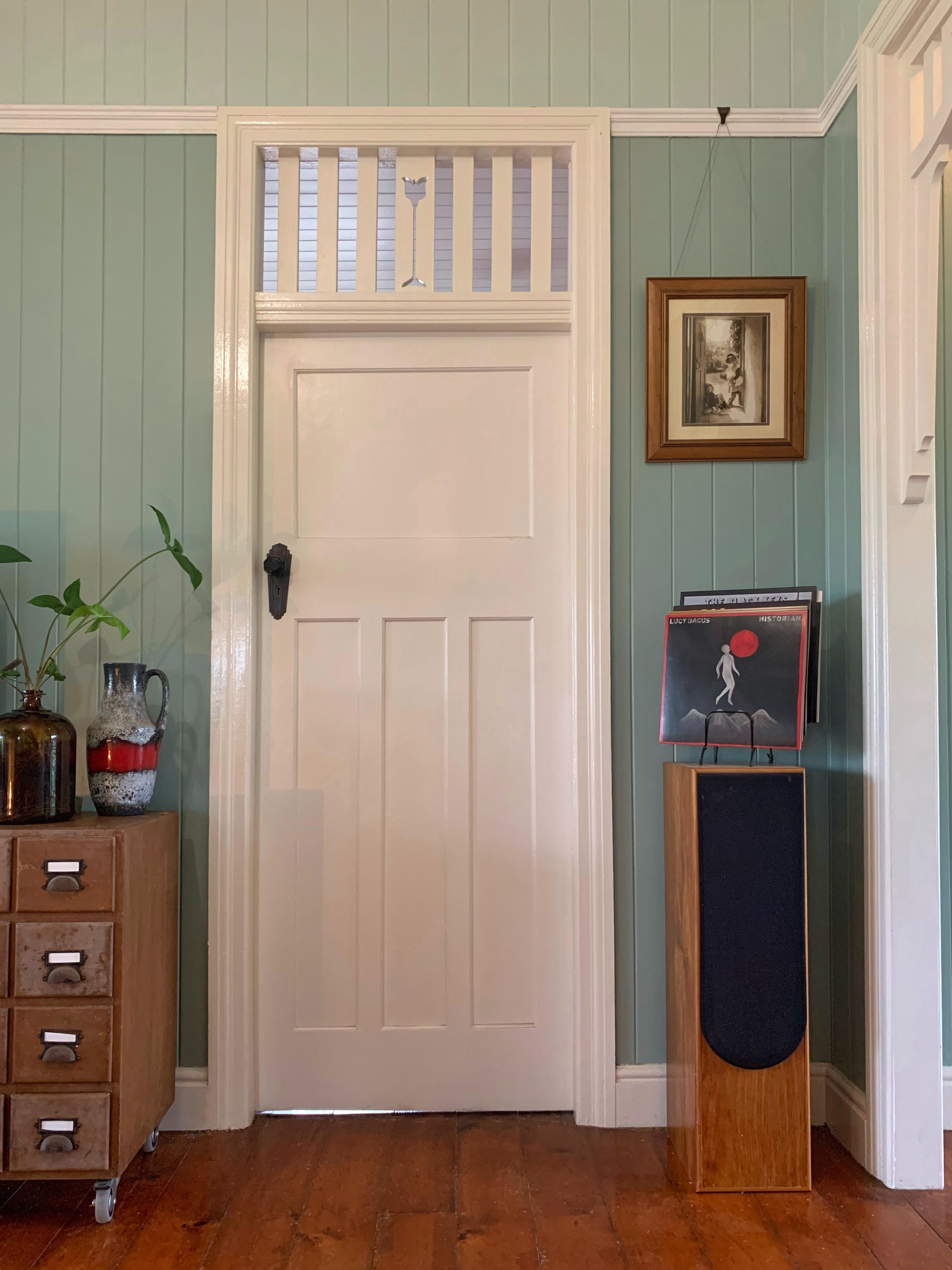
Closed bedroom doorS03-02

Closed bedroom door

Fit / source

Editorial hypothesis, not measured CTR: A closed bedroom door can catch a parent who is learning to respect their child's space without abandoning morning backup.

Bedroom/daughter/location are archived source context, not narrator identity. Framed artwork and album-cover rights unverified. More composed than the other snapshots, but still a lived-in personal interior.

Source page
Download

Rights unverified · Not narrator/customer evidence

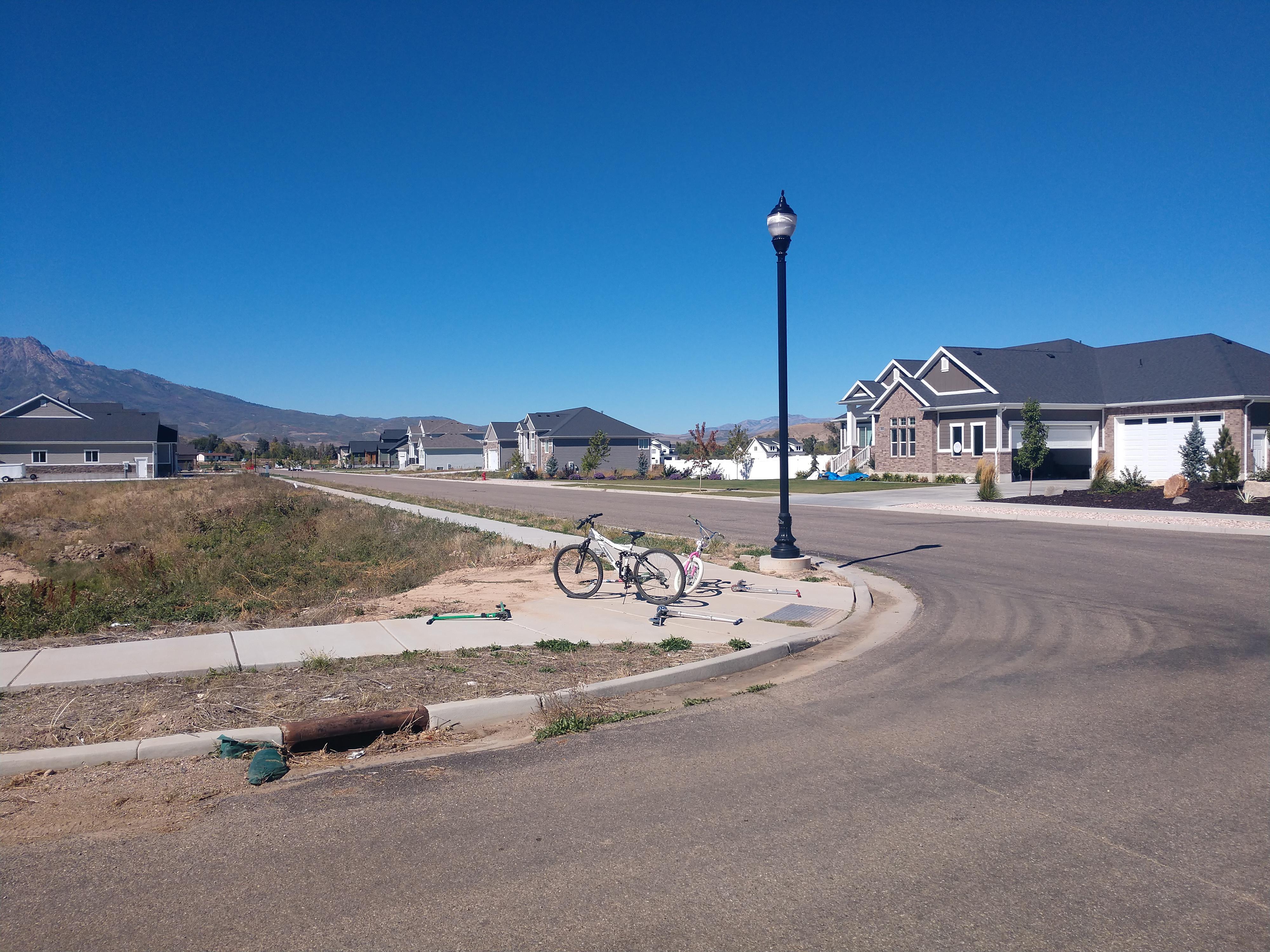
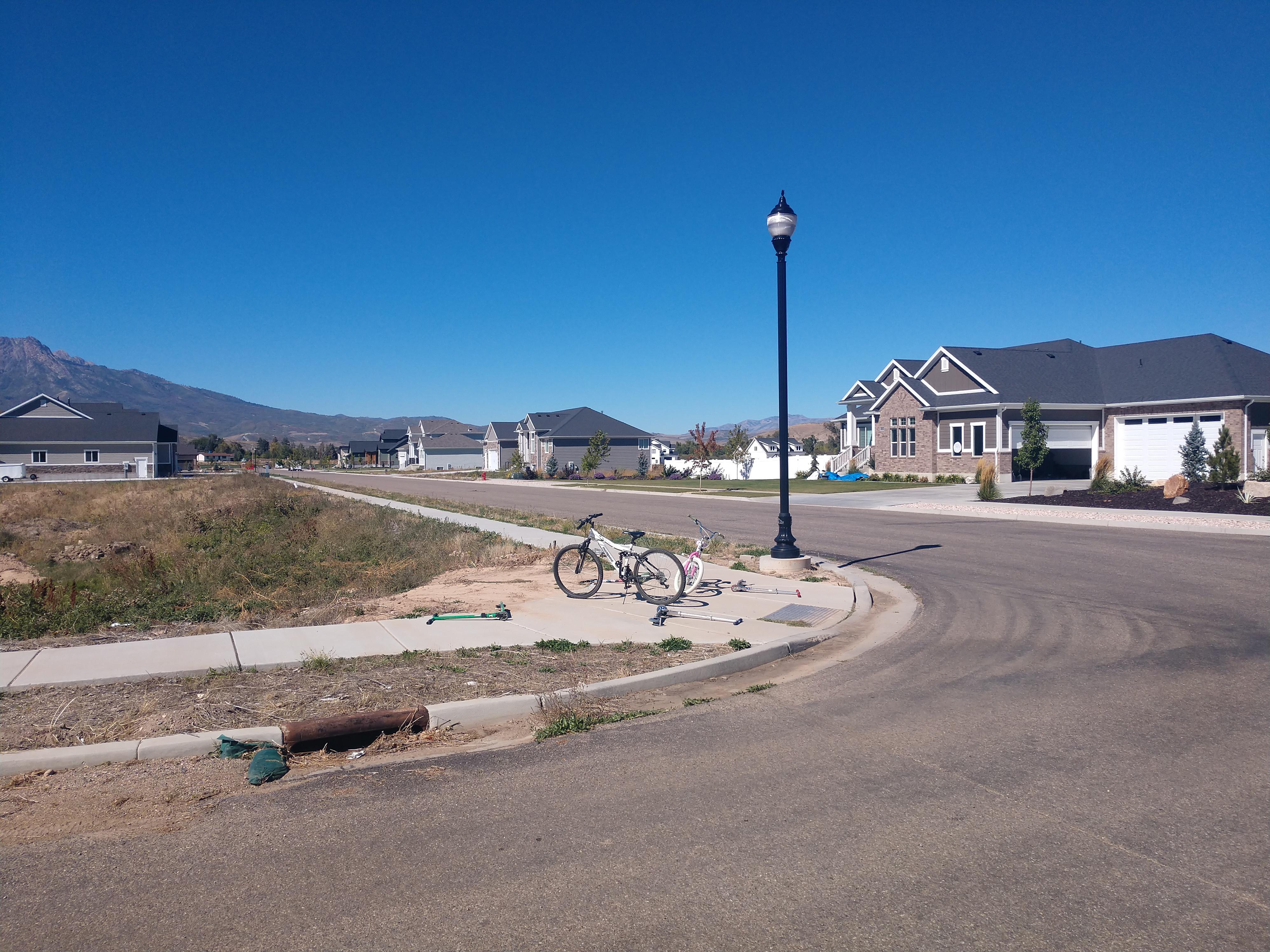
Bikes left at the cornerS03-03

Bikes left at the corner

Fit / source

Editorial hypothesis, not measured CTR: Bikes waiting at a neighborhood corner may evoke the small freedoms a parent wants their child to handle without supervision.

School-bus-stop purpose comes from the archived title only. No claim that these children traveled alone or that this is the fictional family.

Source page
Download

Rights unverified · Not narrator/customer evidence

Backpack bottle workaroundS03-04

Backpack bottle workaround

Fit / source

Editorial hypothesis, not measured CTR: A practical bag-packing workaround may interest a parent helping their child find systems they can manage themselves.

Intentional reuse of initial shared asset F02; recognizable readiness/ownership motif, not evidence of a child packing it or of ADHD. Not a phone-across-room scene.

Source page
Download

Rights unverified · Not narrator/customer evidence

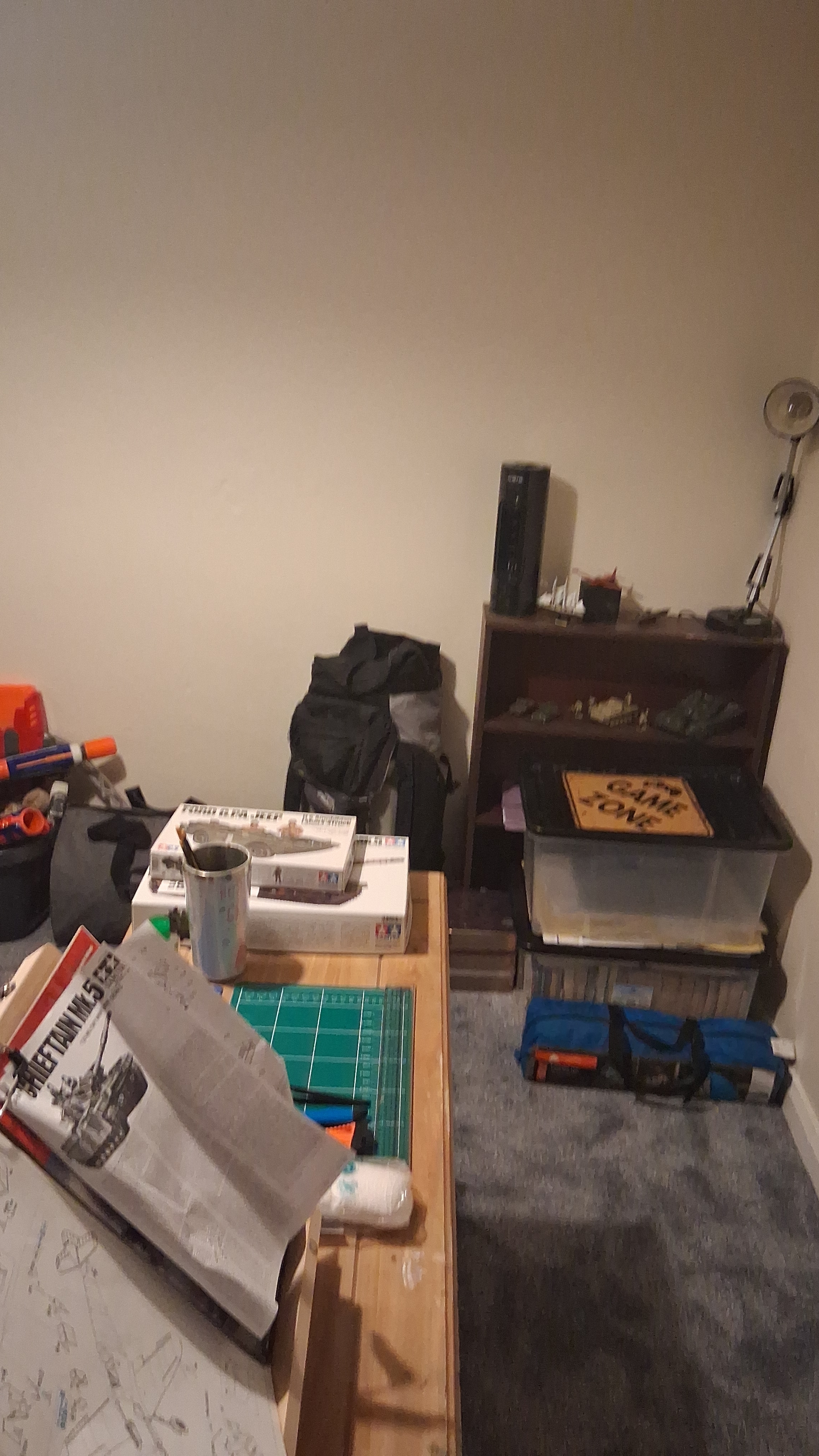
Personal model-building cornerS03-05

Personal model-building corner

Fit / source

Editorial hypothesis, not measured CTR: A parent who sees their child take ownership of intricate hobbies may recognize the wish to give them the same room to manage everyday tasks.

Lower-priority affinity test: model-building, not generic mess, is the connection. No inference that the resident built the models, has ADHD or is Ben. Archived title mentions a minor, but no minor likeness appears. Toy-blaster/military-model imagery and loose framing may reduce suitability; review before any use.

Source page
Download

Rights unverified · Not narrator/customer evidence

Headlines

1. We both wanted me out of the doorway
2. He wanted to start without my knock

Primary text

Review context, not part of primary text: fictional creative draft; not a customer testimonial.

My son asked me to stop coming into his room in the morning.

The next morning, I stood outside his door wondering how long I could keep that promise.

I'm Claire, and my son is Ben.

I work in the office of a plumbing company, where the first calls arrive before I've taken my coat off.

At home, Ben is the one who gets summoned when the television loses its picture.

He'll sit on the floor with the cables, waving away my offer to help.

Then he'll ask whether I want the remote explained again.

He's funny when we're not trying to get out of the house.

I miss that version of us in the mornings.

Ben has ADHD, and getting awake has been a hard part of his day for years.

He'll put his bag by the front door at night.

He'll tell me what time he needs to leave.

Then morning comes, and I hear the alarm while he's still asleep.

The bag stays by the door.

I used to call his name on my way to the bathroom.

He'd answer, so I'd go and get dressed.

When I came out, his room would be quiet again.

Eventually I learned to wait for more than an answer.

I'd stand there until he sat up, then return because sitting up hadn't always lasted either.

He hated opening his eyes to find me watching him.

I hated how often I was already annoyed by then.

Putting his phone across the room seemed sensible.

He'd have to get up to stop it.

Except on the mornings he didn't wake to it, the phone stayed across the room making noise until I arrived.

The distance gave me farther to walk.

We tried a separate loud clock after that.

Ben chose the sound himself.

I remember him pressing the button in the afternoon and wincing.

Neither of us could imagine him sleeping through that.

The following week, I was hearing it from the landing.

By breakfast I was saying things like, "How are you going to manage when I'm not here?"

He'd push his plate away.

I'd leave for work thinking about the plate.

The argument about his door happened after dinner.

He was in his room sorting a pile of old game cases.

I went in to put down clean towels, and he asked me to knock.

"Of course," I said.

Then he asked whether that could include mornings.

I agreed before either of us said what would happen if he didn't answer.

That's how I ended up outside his door the next day, listening.

I knocked once.

Nothing.

I waited until I knew he was running short of time, then went in.

When he finally came downstairs, he didn't argue about being late.

"You said it was my room."

His voice was quiet, which made it worse.

That afternoon he called me into the same room.

He'd pulled out the chair from his desk for me.

His laptop was open beside the loud clock.

"I looked up alarms you can feel," he said.

I'd expected to explain why I had to go in.

He wanted to show me a way I might not have to.

We started with the alarm already sitting there.

"What about moving this even farther away?" I asked.

He looked toward the doorway.

"Then you'll hear it out there and come in here."

I could hardly argue.

Moving the clock changed where he would have to go after waking.

It didn't change the sound he was sleeping through.

Ben brought up his phone's alarm settings.

"I can do this bit," he said.

Then he pointed at the clock.

"It's the bit after it goes off."

For once, we were talking about a particular step instead of whether he was responsible enough.

It was like having his reminder delivered to me, then asking why he hadn't acted on it.

I heard the noise.

I carried the message into his room.

He woke to me telling him what to do.

That explained why simply backing away hadn't given him the morning he wanted.

We needed a different way to deliver that first cue, as well as space for him to respond.

He showed me an alarm that vibrated through the bed, then the wrist alarms he'd found.

The bed option made sense if he didn't want to wear anything.

I asked which he preferred.

"Something I can set here," he said, holding up his wrist.

He opened the setup information for one of the bands.

There was no phone app to hand over to me.

The alarm was set on the band itself.

I leaned closer.

I'd been picturing another noise in his room, perhaps another thing for me to stop.

This put a physical cue against his wrist instead.

The vibration slowly got stronger until the wearer dismissed it.

"So it gets stronger while it's going?" I asked.

He went back over that part with me.

He could still dismiss it and lie down again.

"I know I have to get up," he said.

"I want to wake up before you have to come in."

I let him finish showing me the band.

It was plain black silicone with an adjustable strap.

He zoomed in on the time display; it goes dark when idle.

"I'd wear that," he said.

I'd come into his room prepared to defend my checking.

Now he was explaining his choice, and I was listening.

The one Ben chose was Dawn Band.

The on-band setup mattered to him; the wrist vibration that slowly gets stronger mattered to me.

Together, those gave us a reason to choose it over moving the same loud clock again.

Here's Dawn if you'd like to look with your child: https://dawnbands.com/pages/adhd-teen-alarm

I can picture the next part, if that cue helps Ben wake and get himself up.

At first, there's still an agreed backup time, and I still notice every sound from his room.

But he's the one setting the band at night.

In the morning, he dismisses it and gets out of bed before my knock.

As those mornings add up, the bathroom door closes while I'm still getting dressed.

I finish with the mirror instead of stopping halfway through to listen at the landing.

Ben comes downstairs and asks whether his blue jacket is dry.

I tell him it's on the rack.

He gets it.

Such an ordinary exchange, after all the mornings when every question sounded like checking.

Farther into that picture, I'm passing his room with the clean towels.

The door is closed.

I knock, because I want to ask him something.

"Come in," he says.

There's room for me to be his mom without being the person who starts his day.

Dawn has a 60-night money-back guarantee.

Take a look before another morning turns into an argument about freedom you both want.

PS: In that future, I still need Ben to explain the remote.

I don't mind asking.

Writer source notes

S04 · Ownership

S04: The phone in my hand

Discussion: reviewed with flagsOriginal SOP: not metLaunch: HOLD

Five-image row · 5/5 selected

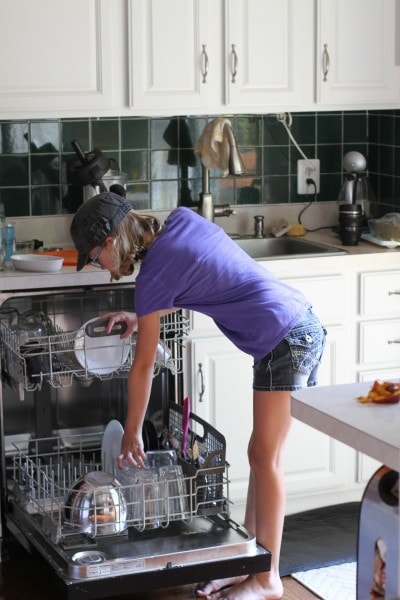
Loading the dishwasherS04-02

Loading the dishwasher

Fit / source

Editorial hypothesis, not measured CTR: A child handling an ordinary household job is a recognizable picture of help that does not have to stay in the parent's hands.

Minor-like person remains potentially identifiable despite downward face. Requires likeness/guardian clearance; no age, gender, relationship, diagnosis or independence outcome asserted.

Source page
Download

Rights unverified · Not narrator/customer evidence

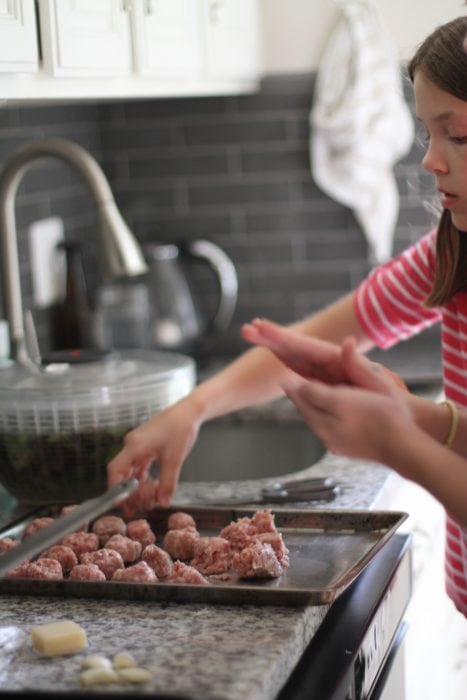
Hands-on meal preparationS04-01

Hands-on meal preparation

Fit / source

Editorial hypothesis, not measured CTR: A parent trying not to take over may recognize the value of letting a child do the work, even when doing it yourself feels faster.

Visible minor-like side-profile face; not anonymous. Requires likeness/guardian and commercial-rights clearance before any use. Not the fictional boy; contextual household competence only.

Source page
Download

Rights unverified · Not narrator/customer evidence

Bikes and scooters at a neighborhood cornerS04-04

Bikes and scooters at a neighborhood corner

Fit / source

Editorial hypothesis, not measured CTR: A parent who knows their child is capable outside the morning routine may stop for the familiar sight of bikes left by kids going about their day.

School-bus-stop and child-use context are archived title claims, not proved in pixels. No bike repair or independent waking shown.

Source page
Download

Rights unverified · Not narrator/customer evidence

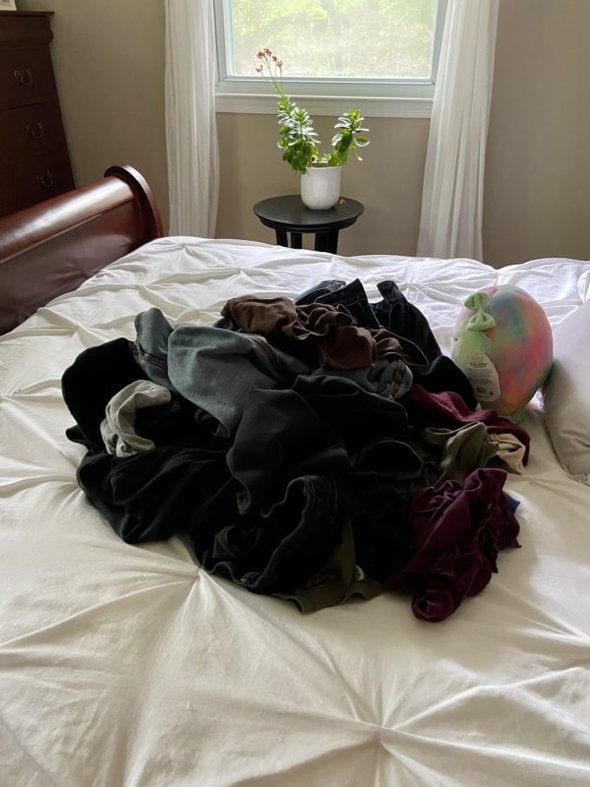
Laundry waiting on the bedS04-03

Laundry waiting on the bed

Fit / source

Editorial hypothesis, not measured CTR: A parent who keeps interrupting their own preparation may recognize one more unfinished task waiting where they left it.

Contextual burden control, not evidence of executive dysfunction or whose laundry it is. Not presented as child-owned.

Source page
Download

Rights unverified · Not narrator/customer evidence

First homemade pizza, source-context competenceS04-05

First homemade pizza, source-context competence

Fit / source

Editorial hypothesis, not measured CTR: A child proudly making a real meal is an everyday competence milestone a parent may recognize beyond the morning struggle.

Child-made/first-pizza attribution is live article caption context only; pixels show food, not the maker. This is the second food-related photo, not a fifth unique life category.

Source page
Download

Rights unverified · Not narrator/customer evidence

Headlines

1. Whose alarm was I setting?
2. Another device shouldn't mean another job

Primary text

Review context, not part of primary text: fictional creative draft; not a customer testimonial.

My son handed me his phone to set his alarm, and I realized what every new solution in our house had become.

My name is Leah.

I work at the front desk of a busy dental office, where I spend the day finding things in a calendar.

At home, I can find the permission slip under the grocery receipt without moving either one.

My son, Evan, calls this my useless superpower.

He's sixteen, has ADHD, and can spend an entire Saturday repairing a bike with his friend in our garage.

Mornings are harder.

I know the sound of his alarm through the bathroom wall.

I know which sleepy answer means I can go finish my hair.

Actually, I don't know that last one.

I keep thinking I do.

I'd leave after hearing him answer, get halfway through something, then go back when his room stayed quiet.

By breakfast, I was already speaking to him in instructions.

Shoes.

Bag.

Please eat that here instead of carrying it out the door.

He used to sit on the kitchen stool and tell me what he was making in the garage.

Lately, he stood up as soon as I came in.

It wasn't one enormous fight that did that.

It was all those mornings when I sounded cross before he'd said anything.

We tried a louder clock first.

Evan chose the sound, and we stood in his room laughing at how awful it was.

I remember thinking nobody could ignore that.

The next morning, I heard it from the bathroom.

He was still under the covers when I went in.

The clock had made my cue louder.

It hadn't taken me out of the job.

Then we made the evening routine better.

His bag went beside his shoes.

He picked his clothes before bed instead of searching the laundry basket while I waited with my car keys.

That helped, and we kept it.

But clothes laid out on a chair were still clothes waiting for a sleeping boy.

After that, I started checking the alarm myself at night.

It seemed quicker than asking whether he'd done it.

Quicker that night, anyway.

Which brings me to the phone.

Evan was standing beside the kitchen stool, holding it out.

We had spent part of that afternoon discussing him doing more for himself.

I took the phone automatically.

Then he started walking away.

"Hang on."

He turned around, expecting me to ask what time.

Instead, I put the phone back on the counter.

"Show me what you need to set."

He came back and opened the alarm.

I reached over when he paused, then pulled my hand back.

He knew where the setting was.

He was reading it.

He could set an alarm.

Waking to it was the part we hadn't solved.

We were both tired, and doing the next thing myself had often been the quickest way through.

But before I bought another device, I wanted to know whose hands it would spend the evening in.

Evan slid onto the stool.

"What about one that doesn't need the phone?"

I started looking for the loudest alarm again.

He pointed at what I'd typed.

"We already did loud."

Fair.

We changed the search to alarms he could set without a phone.

For once, he read the setup descriptions while I sat beside him.

Ordinary clocks made sense on that score.

The controls could stay in his room, and he wouldn't need to hand me anything.

Then I pictured myself hearing one through the bathroom wall again.

"Setting it yourself is one part," I said.

"It still has to get your attention."

That was how wrist alarms entered the conversation.

I had thought of vibration as something a watch did when a message came in.

Evan was reading about a band made for waking.

"This goes against your wrist," he said.

I leaned closer to the description.

A clock sends sound into the room.

This puts a moving cue against the person wearing it.

Like the difference between calling someone's name from the doorway and tapping their arm.

I could picture that difference without turning the volume up again.

The next detail mattered too: the vibration slowly gets stronger until the wearer dismisses it.

"So I turn it off?"

"Yes."

"Then I still have to get up."

"Yes, you do."

He gave me a look as if that were the first sensible thing I'd said about alarms in years.

I didn't need a device that trapped him in a morning routine.

I needed a cue he could use, with controls he didn't pass back to me.

We looked at the band itself.

Black silicone, an adjustable buckle strap, a time display that goes dark when idle.

Evan enlarged the picture to look at the strap.

"I'd rather sleep in something like that than my big watch."

That was his preference, not something I'd decided for him.

I went back to the setup description.

The alarm was set on the band itself, without an app.

No part of setting it required my phone.

A full smartwatch offered plenty of other things, but those weren't what we were looking for that evening.

This one also had a motor the company described as three times stronger than common smartwatch motors.

A different kind of cue, a stronger motor than the usual tracker, and controls in his own hands.

I wasn't looking for another app to hand him. I wanted an alarm he could feel and set himself.

"This is the one I'd choose," I told him.

It's called Dawn.

You can look at the band and how it's set here: https://dawnbands.com/pages/adhd-teen-alarm

It comes with a 60-night money-back guarantee.

There would still be charging and wearing to remember, and we'd keep help available until we knew how he responded.

What I can picture, if Dawn suits Evan, is a change that starts smaller than a peaceful household.

At first, we'd sit together while he learned the controls.

I'd feel the familiar urge to take it and finish for him.

This time, I'd keep my hands around my mug.

Later, on an evening when he needed a different wake-up time, he'd change it himself.

I'd be in the next room folding towels, not holding the device while he waited.

As he began handling the alarm and getting himself up, there would be fewer unfinished things on my side of the morning.

I'd finish my hair before picking up my keys.

Evan would come into the kitchen while I was still sitting down.

I picture him pulling out the stool rather than watching for me to start hurrying him.

"We got the brake working," he'd say.

And I'd have time to ask him how.

That evening with his phone, we hadn't solved waking up.

But when Evan left the kitchen, he took it with him.

I stayed on the stool a little longer.

If the next alarm feels like another job before you've even bought it, take a look at Dawn together.

Helping your child learn and having to run every morning aren't the same thing.

P.S. I still want to be the person Evan brings his questions to.

I'd like more of them to be about the bike.

Writer source notes
- **KEEP / IMPROVE / CHANGE / GAP:** Keep mother's independence desire, son/ADHD context, phone handover and practical ownership obstacle. Restore named people, role, ordinary relationship before erosion. Replace comments and task checklist with son-led setup-description comparison, layered cue reasoning, physical choice and a warm kitchen-stool callback. Gap: no achieved product outcome or expert endorsement.
- **Fiction boundary:** Leah/Evan, occupation, bike, dialogue, old-clock events and phone incident are invented illustrative scenes, explicitly labeled in primary. No claim of actual Dawn purchase/use. The one imagined sequence begins “What I can picture, if Dawn suits Evan”; subsequent would-statements stay inside that frame. Present-tense closing phone change occurred only in the fictional pre-product scene.
- **Mechanism scope:** Two linked practical problems: room-wide sound still cues mother; evening setup migrates to her hands. Wrist vibration changes cue delivery; on-band controls remove app dependency. This does not claim cause/treatment of ADHD, permanent waking reliability or automatic adherence. Tapping analogy explains delivery only.
- **Differentiation:** Relevant alternatives are louder clock, preparation and full smartwatch. Acknowledges preparation helped; no false claim that every other alarm fails or no other band has similar features. Wearing preference is fictional willingness, not claimed comfort after use.
- **Evidence-dependent SOP exceptions:** No licensed authority/recommendation; no exclusive whole-cycle cure; no observed week-by-week outcome timeline. Ordinary consequential incident replaces literal catastrophic crisis. Original SOP 500–800-line scale and 75–80% reveal window are not silently waived; measurements and full function map in writer-b.md. Do not mark original SOP PASS.
- **Operational release conflict:** Raw comment `1247860568413376` reports one-minute vibration versus approved until-dismissed description; current-unit verification remains pending. No motor lab test, charge duration, battery life or extra refund terms invented.
- **Status:** Writer self-review only. Original automated native gates NOT RUN; parent/fresh independent review pending. No publication, paid service or R1 modification.

S05 · Urgency

S05: The emergency key

Discussion: reviewed with flagsOriginal SOP: not metLaunch: HOLD

Five-image row · 5/5 selected

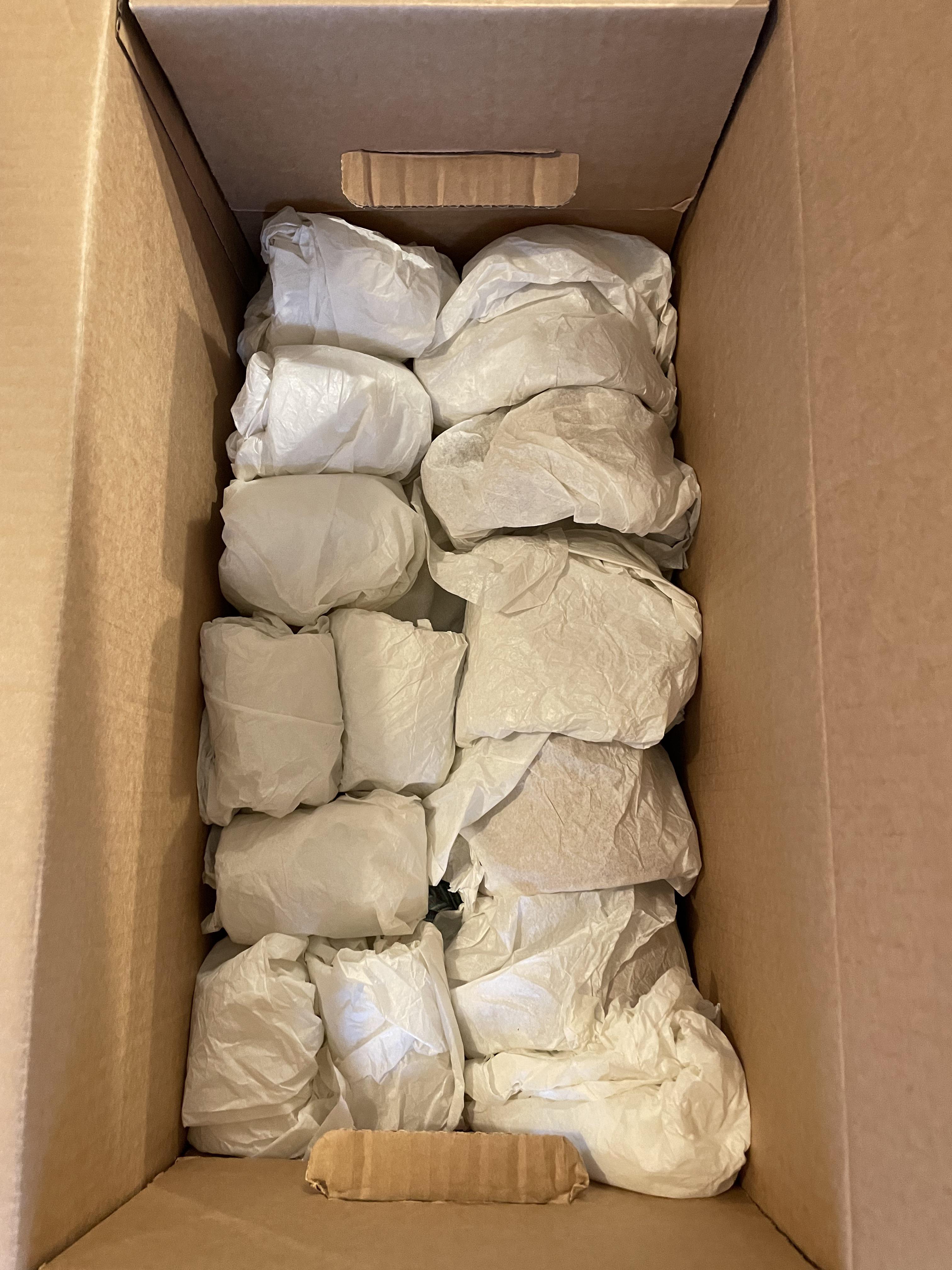
Carefully packed belongingsS05-01

Carefully packed belongings

Fit / source

Editorial hypothesis, not measured CTR: Helping a child pack the ordinary things they will need makes the approaching separation feel real.

Packing is visible; child ownership, destination and contents are not established.

Source page
Download

Rights unverified · Not narrator/customer evidence

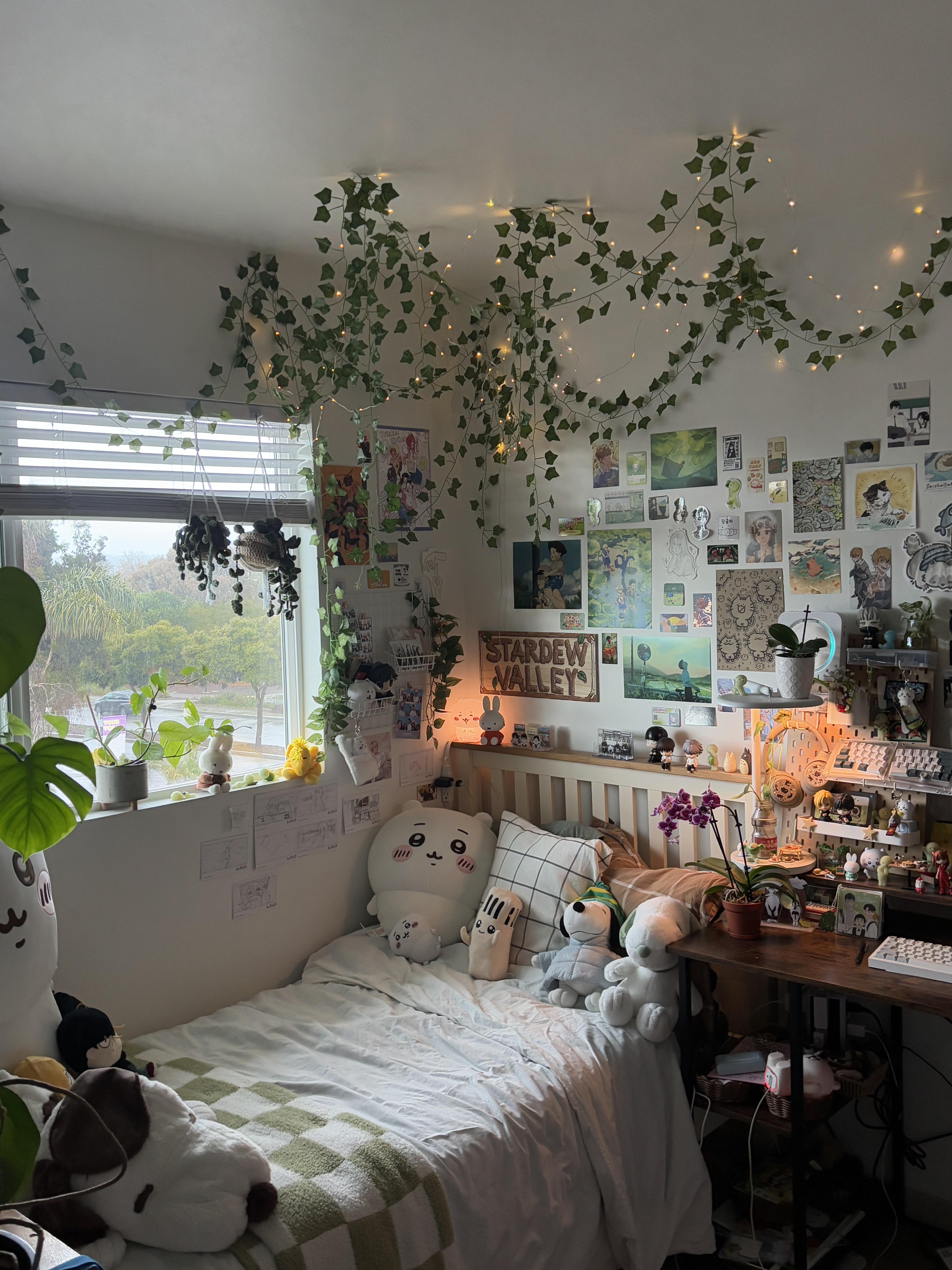
Making a first room their ownS05-02

Making a first room their own

Fit / source

Editorial hypothesis, not measured CTR: A parent helping a child establish their own space may recognize the mix of familiar keepsakes and a new life.

First college apartment is archived title context, not independently established by pixels. No age, gender or diagnosis inference; wall-art rights also unverified.

Source page
Download

Rights unverified · Not narrator/customer evidence

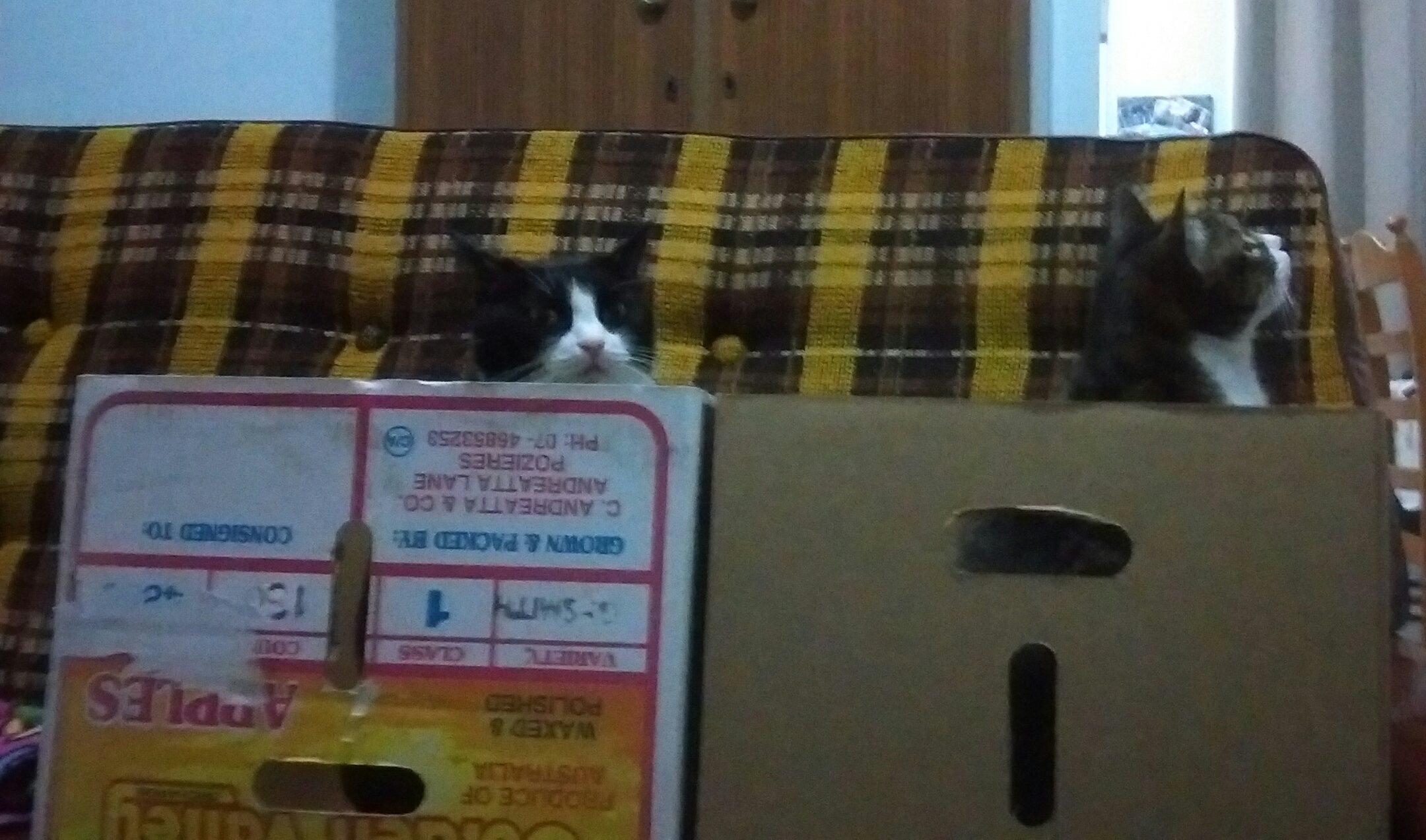
Cats interrupting packingS05-03

Cats interrupting packing

Fit / source

Editorial hypothesis, not measured CTR: The pets claiming the packing boxes is a warm, recognizable interruption during a household transition.

Two of four photos involve boxes, but only this one is pet-led. Intentionally reuses initial shortlist F04; not a novel discovery.

Source page
Download

Rights unverified · Not narrator/customer evidence

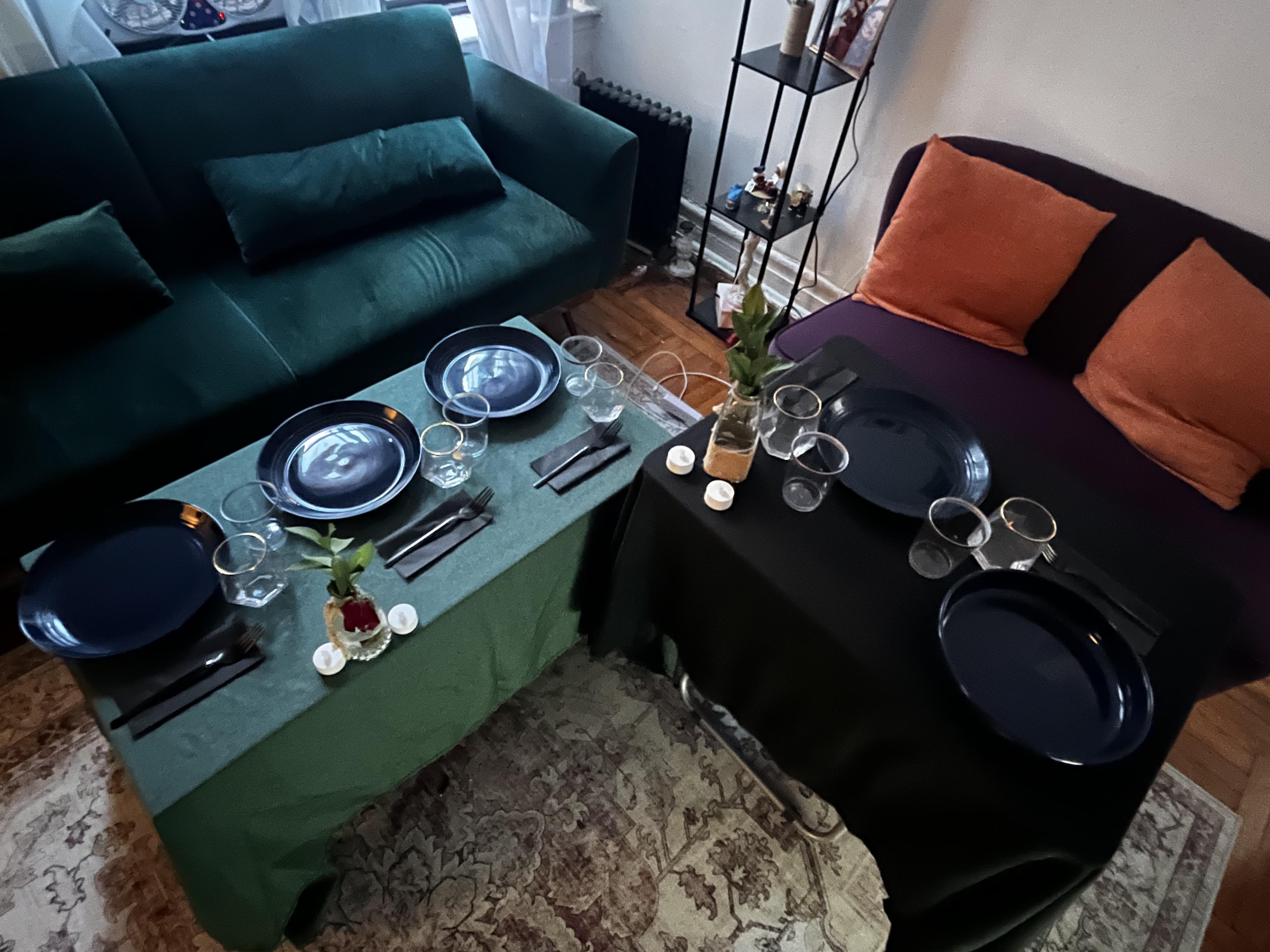
Hosting in an improvised first-home setupS05-04

Hosting in an improvised first-home setup

Fit / source

Editorial hypothesis, not measured CTR: A parent looking forward to visiting rather than managing a child may stop for the improvised pride of hosting in a small home.

Hosting is visible, but first home and parent-child relationship are not. This is the broadest independence-affinity control, not an actual payoff scene.

Source page
Download

Rights unverified · Not narrator/customer evidence

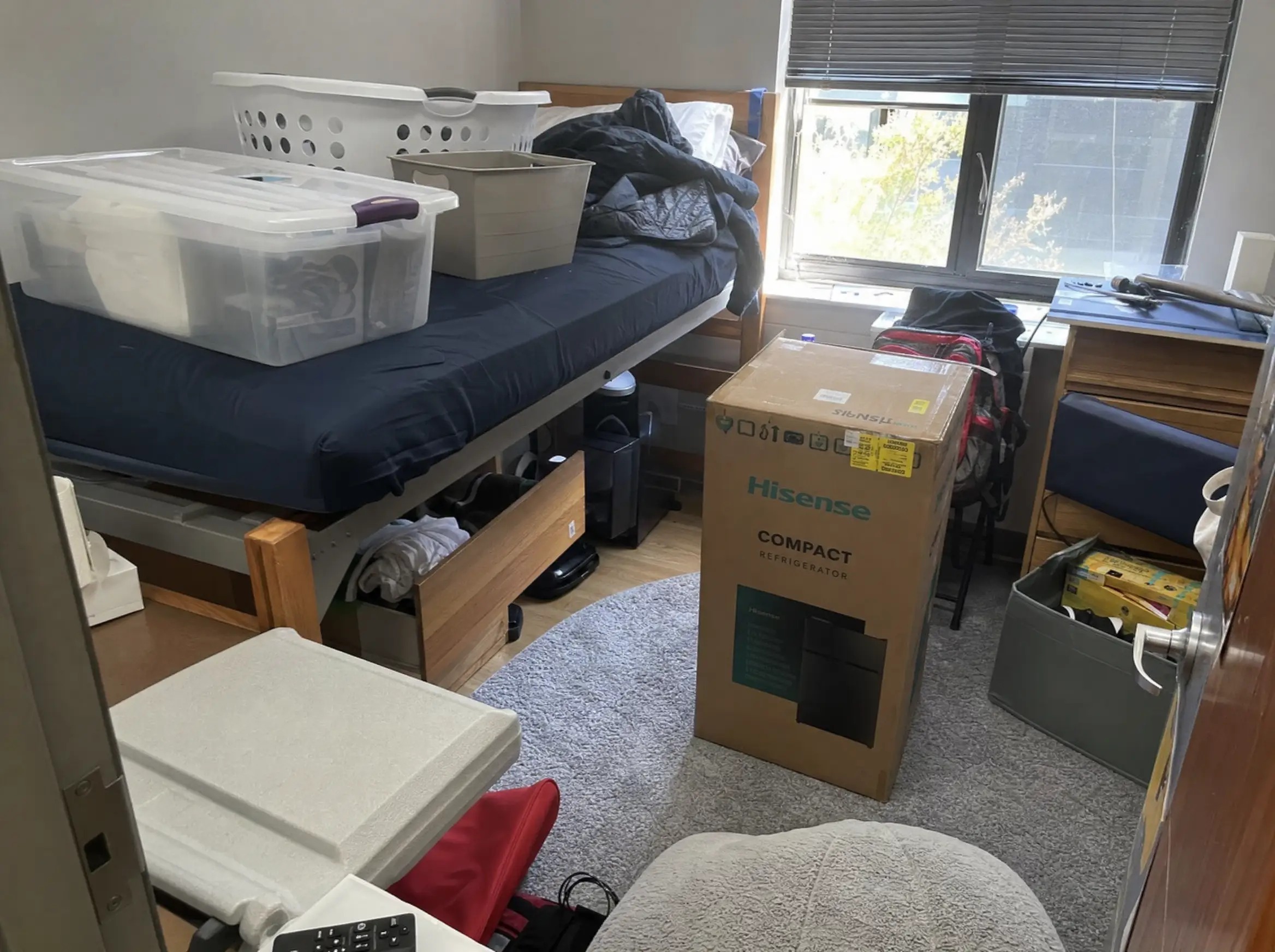
Original Fable dorm move-in controlS05-05

Original Fable dorm move-in control

Fit / source

Editorial hypothesis: visible move-in belongings reinforce the parent-to-independent-living handoff. Deliberate original-ad visual reference, not a new image discovery or isolated image winner.

Prior ad usage does not establish license. Dorm context differs from apartment narrative but aligns with independent-living desire.

Source page
Download

Rights unverified · Not narrator/customer evidence

Headlines

1. The spare key was for emergencies
2. I wanted to visit, not wake her

Primary text

Review context, not part of primary text: fictional creative draft; not a customer testimonial.

My daughter offered me a spare key, and I nearly asked how early I could use it.

She was giving me a way into her new home.

I was already thinking about getting her out of bed.

I'm Teresa, and my daughter is Lena.

I keep the accounts for a small bakery, mostly from our dining-room table.

Lena has been working at a print shop and saving to move into an apartment with her friend June.

For months, our conversations have involved deposits, secondhand furniture and whether two people need that many mugs.

She says they do.

She has wrapped every one of them in newspaper.

I ought to be worrying about whether the mugs survive the car journey.

Instead, I keep thinking about her first work morning there.

Lena has ADHD, and she still needs help getting awake.

Once she's up, she'll race through the house looking for the cardigan she's decided she needs.

Getting to that part is where I come in.

I'll hear her phone alarm from the table and call up to her.

She'll answer.

I go back to an invoice, look at the time again, and realize I haven't heard a footstep.

Some mornings I make the same trip upstairs with the same uncapped pen still in my hand.

I used to finish the accounts before she left.

Now I keep putting the page aside.

She keeps waking to me telling her how much time she's lost.

We've tried putting her favorite music on the alarm.

She liked the idea of starting the day with something she wanted to hear.

On the mornings she slept through it, I heard the song and knew I needed to go upstairs.

We also wrote out a morning schedule, working backward from when she had to leave.

It helped her see how long getting ready took.

But there were mornings when the schedule was on the fridge and she was still in bed.

I could follow every step for her except the one she needed to start.

Then there was my simplest solution.

"I'll call you," I'd said when we first talked about the move.

It sounded so manageable from our dining room.

She'd have her own place, and I'd still make sure she was awake.

The day we collected the keys, the apartment was almost empty.

Lena and I carried up a lamp and a box of kitchen things.

June was coming later with her father and a borrowed van.

Lena stood in her bedroom doorway, deciding where the bed should go.

I asked about the window.

Then the curtains.

Then how early she'd be leaving for work.

She held out my spare key.

"For emergencies, Mom."

I closed my hand around it.

I was trying to work out whether I could finish at home, drive over and still get her moving on a bad morning.

Lena saw me looking from the key to her bedroom.

"Please don't make this another room you have to wake me in."

We sat on the bare floor beside the box.

I'd wanted her to have her own front door.

Somehow I'd carried our old morning through it before she'd even moved in.

I took out my phone.

"When I ring you here, what happens if you answer and go back to sleep?"

"You ring again."

We both knew the answer.

At home, I could look in and see she was still in bed.

From my table, I'd be listening to the same sleepy answer with no way to tell.

A daily call could be a backup.

It wasn't the independence either of us had pictured.

"June gets up early," I said, then wished I hadn't.

Lena looked at me.

"She agreed to share the rent."

Fair enough.

I put my phone back in my bag.

We talked through what belonged in that bedroom besides the bed.

Lena wanted an alarm she could manage without waking June through the wall.

I searched for quiet alarms for a shared apartment while she unwrapped the lamp.

The search brought up vibrating alarms, including ones for the bed and ones worn on the wrist.

I called her over to look.

"I thought an alarm had to make noise," she said.

So had I, without ever putting it into words.

The music we'd tried still sent sound into the room.

When Lena slept through it, the person who responded was me.

Calling from another house would send another sound, followed by more waiting from me.

The arrangement was like a delivery that needed my signature before she could receive it.

Changing her address didn't remove that step.

A wrist alarm put vibration against her skin at the time she set.

It offered a cue for her to feel without my call arriving first.

Lena sat beside me and read the band details.

"Does it only buzz once?"

"It slowly gets stronger until you dismiss it," I said, pointing to the description.

I showed her the setup instructions too.

The time was set on the band, without an app.

She could change it for her own workdays without sending me a screenshot to sort out.

We considered the bed alarm as well.

That was another way to use vibration, and a sensible option for someone who didn't want anything on their wrist.

Lena preferred something she could keep with her, rather than something we would set up around this particular bed.

She looked at the adjustable black silicone strap.

"I'd wear that."

I asked whether she was saying it because I was worried.

She shook her head.

"I don't want you calling June because I'm not answering."

Neither did I.

Wearing it and getting out of bed would still be hers to do; she could dismiss the vibration without getting up.

But I wasn't looking for something that could force her.

I wanted a waking cue she had chosen, could set herself, and could take into this new room.

That's why we chose Dawn Band.

The gradually stronger wrist vibration answered the waking-cue question, and the on-band setup kept control with Lena as her schedule changed.

Here's the band: https://dawnbands.com/pages/adhd-teen-alarm

This is the next part I picture if Dawn helps Lena get up independently.

It starts before moving day, while she's still at home and I'm available as backup.

She's learning the band in the room she knows, rather than opening an unfamiliar box after we've driven away.

There are mornings when she gets herself up, finds her cardigan and leaves while I'm still at the table.

As those mornings become familiar, I finish a page of accounts without stopping at the sound of her door.

Then we carry the last boxes into the apartment.

The band goes with her own things, because it's already something she uses.

I show her where I've put the spare washing-up sponge.

She tells me she can buy sponges.

I know.

I hug her anyway.

Later in that imagined new routine, her name lights up my phone while I'm making dinner.

She's turned the camera toward a pan and wants to know whether the sauce looks right.

I ask her to stir it so I can see.

We spend the whole call talking about dinner.

The spare key is still in the little pocket inside my bag.

Dawn has a 60-night money-back guarantee.

If morning backup is getting harder to give, look at the band while there's still room to make the change together.

PS: I want Lena to let me in because she's glad I've come over.

I'd like to arrive hungry, carrying something for dinner, and ring the bell.

Writer source notes

S06 · Urgency

S06: The question I missed

Discussion: reviewed with flagsOriginal SOP: not metLaunch: HOLD

Five-image row · 5/5 selected

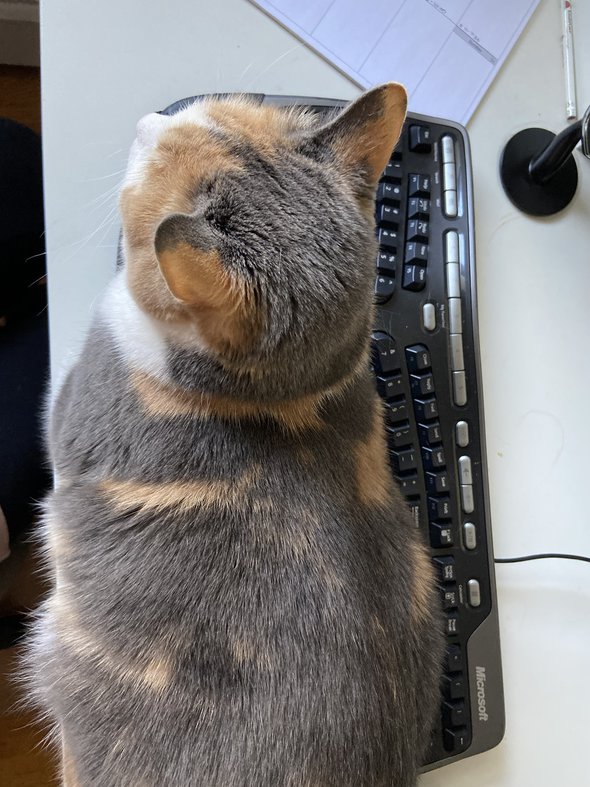
Cat occupying the keyboardS06-C07

Cat occupying the keyboard

Fit / source

Editorial hypothesis, not measured CTR: Working from home does not make your attention freely available; a pet physically blocking the keyboard is an immediately recognizable, lighter version of household interruption.

Contextual interruption control; a pet is not a child and does not establish the narrated event.

Source page
Download

Rights unverified · Not narrator/customer evidence

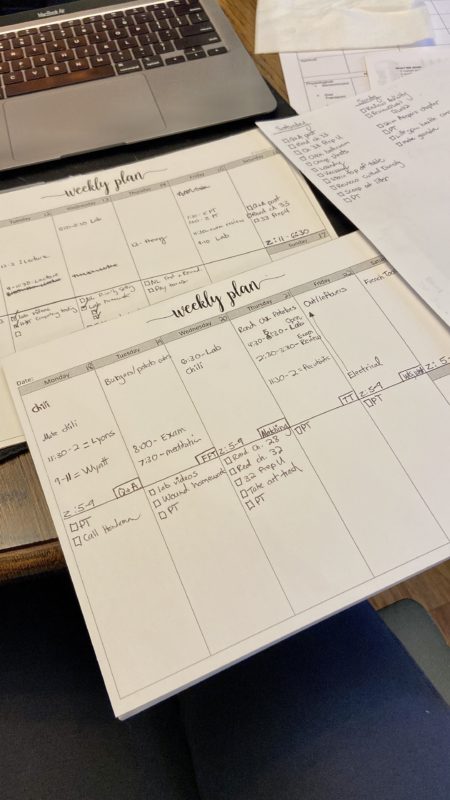
Overlapping weekly plansS06-C04

Overlapping weekly plans

Fit / source

Editorial hypothesis, not measured CTR: A parent whose work and family mornings compete may recognize having to fit both lives into an already filled weekly plan.

Source is adult nursing-school planning, not customer-order scheduling. Some first names/reminders visible; no readable phone/address identified. 450px width limits ad preflight; preserve genuine times without claiming story times.

Source page
Download

Rights unverified · Not narrator/customer evidence

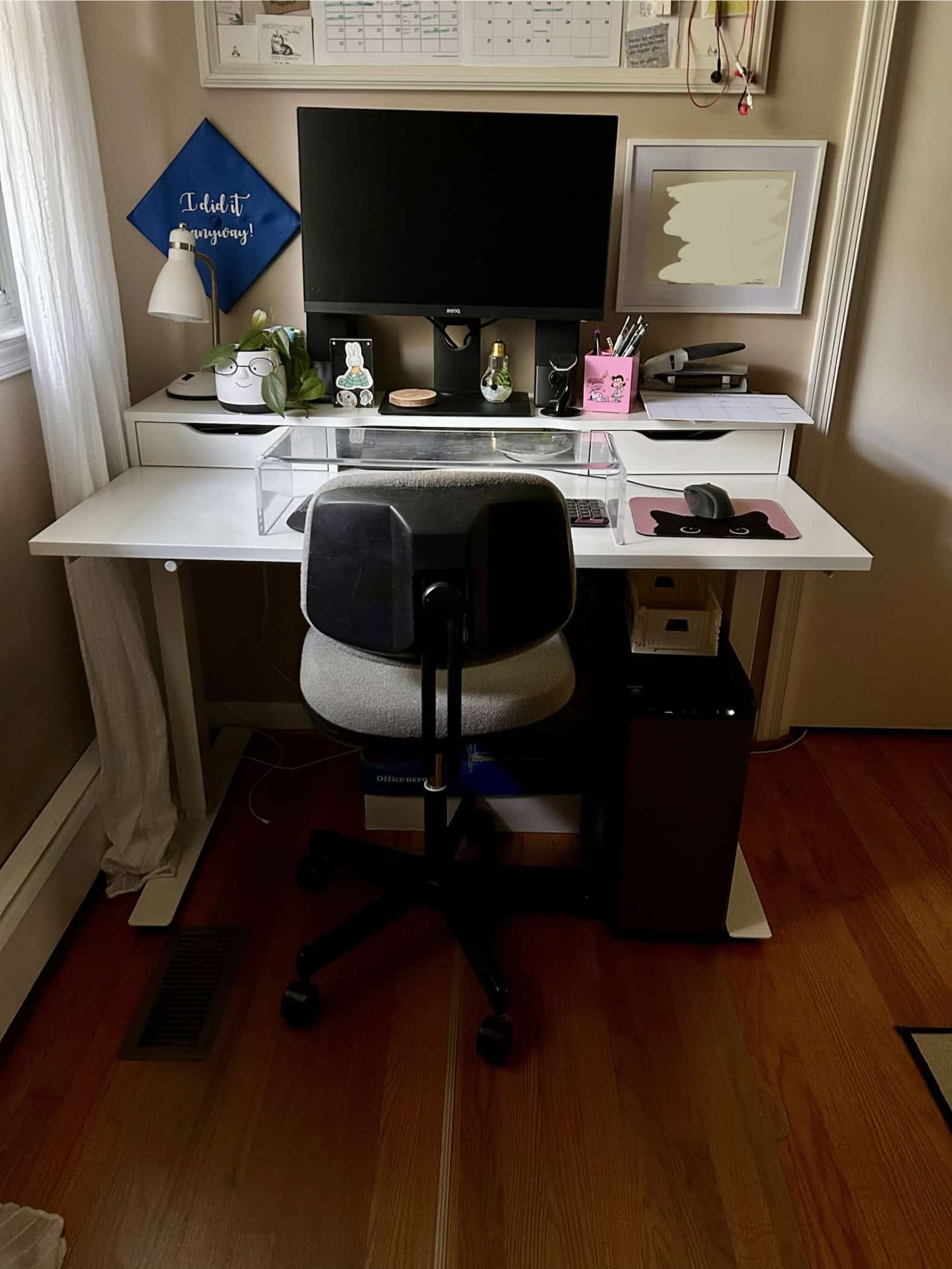
Personal work nookS06-C01

Personal work nook

Fit / source

Editorial hypothesis, not measured CTR: A small personal work corner may catch a parent who needs the work inside that room to count as real work.

Not a verified printing-company office or narrator home. Graduation cap visible; college is not required by story. Existing document masking was in source bytes, not applied by us.

Source page
Download

Rights unverified · Not narrator/customer evidence

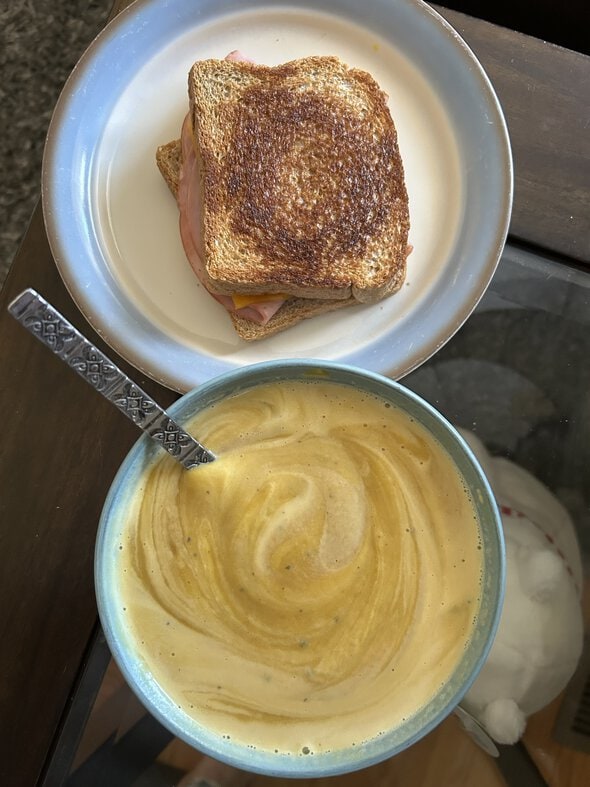
Toasted sandwich and soupS06-C02

Toasted sandwich and soup

Fit / source

Editorial hypothesis, not measured CTR: A simple toasted sandwich can connect to the warm wish for a morning interaction that is about sharing food, not repeatedly waking someone.

Ham is visibly present; not an exact cheese-only reconstruction. No inference that a son cooked it or shared it with a parent.

Source page
Download

Rights unverified · Not narrator/customer evidence

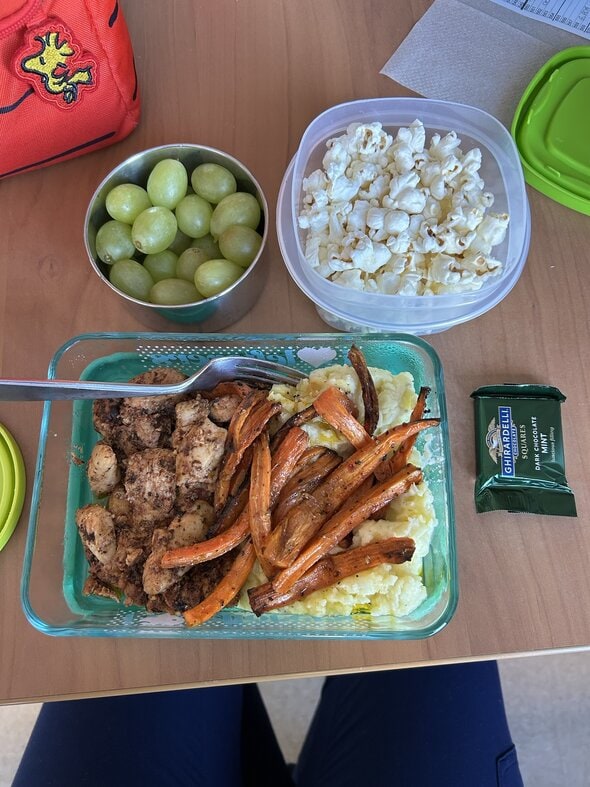
Packed work lunchS06-C03

Packed work lunch

Fit / source

Editorial hypothesis, not measured CTR: Parents with their own workday to prepare for may recognize the ordinary practical effort of packing their own lunch as well as supporting everyone else.

Second food image intentionally contrasts shared comfort with own-workday preparation. Source describes adult work lunch, not teen school lunch. Packaging logos visible; no ownership or diagnosis inference.

Source page
Download

Rights unverified · Not narrator/customer evidence

Headlines

1. My workday couldn't stay outside his bedroom
2. We both had a morning to start

Primary text

Review context, not part of primary text: fictional creative draft; not a customer testimonial.

I muted a work call to wake my son, then unmuted to find everyone waiting for an answer I didn't have.

Not because I hadn't done the work.

I'd missed the question.

I'm Joanne, and I handle customer orders for a small printing company.

I work from the little room off our kitchen, which still has wrapping paper behind the door because it used to be the room where we put everything.

My son, Owen, is seventeen.

He makes grilled cheese directly on the pan without buttering the bread first, and insists his way is better.

We have been disagreeing about this for years.

I'd rather have that argument than the one we were having every morning.

Owen has ADHD.

He could be determined to get up on his own at bedtime and still sleep through the alarm the next day.

I started with a knock before I switched on my computer.

Then a second visit after I opened my emails.

I'd hear him answer, go back to my desk, and wait for footsteps.

When they didn't come, I'd go again.

Working at home made this look manageable.

His room wasn't far away.

I didn't have a commute.

I could make up a few minutes later.

Except I wasn't losing a neat little block of minutes.

I was stopping in the middle of things.

An order number copied halfway.

An email open with no reply written.

A customer explaining a change while I listened for the bathroom door.

Owen didn't like it either.

He'd come through the kitchen already hurrying, and I'd call out whatever he hadn't done yet.

Sometimes he'd say goodbye from the front door.

I'd answer while looking at my screen.

We had tried moving his wake-up earlier to give us more room.

That moved my first trip down the hall earlier too.

A louder clock meant I could hear when things weren't working from my desk.

I still had to leave the desk to help.

We tried having him text me when he was up.

A message meant I could stay at my desk.

When it didn't come, I watched the phone instead of the doorway.

We'd found another way for me to wait.

Then a regular customer asked to move our weekly call earlier.

The new time landed in the middle of our usual waking routine.

I accepted and told myself I'd get Owen up beforehand.

On the first morning, he answered when I knocked.

I opened the call at my desk.

A few minutes later, I realized I still hadn't heard him moving.

I took my headset down the hall.

The customer was talking through a delivery change when I muted myself.

"Owen, you need to get up now."

I waited for an answer from his bed.

Then I heard my name in the headset.

"Joanne?"

I unmuted.

Everyone had stopped talking.

I had the order open on the screen in the other room, and no idea what they'd asked me.

"Could you repeat that?"

I walked back to my desk.

For once, I couldn't stay beside the bed until Owen was moving.

After the call, I wrote the new weekly time on the kitchen calendar.

It looked so ordinary in pen.

There was nothing ordinary about realizing I'd been making work appointments around whether my son had opened his eyes.

That evening, Owen found me looking at the calendar.

"I'll get up before it starts," he said.

I knew he meant it.

He'd meant it the night before too.

"I know you want to," I said.

"We need something besides both of us hoping I won't have to come in."

He sat down while I finished the dishes.

We talked about changing times rather than buying anything.

I could ask about keeping some calls later.

He could ask what flexibility existed in his schedule.

Those were reasonable conversations to have.

But moving every appointment around his waking wasn't a plan either of us wanted to depend on.

My phone vibrated against the counter while we were talking.

I picked it up and checked the message.

Then I put it back and looked at it for a moment.

I'd been searching for something I could hear from the office.

Why was hearing it in the office still the requirement?

Later, I searched for alarms that gave a physical cue instead of relying on sound.

The options included something under the pillow and something worn on the wrist.

I wasn't looking for a way to send more reminders from my desk.

A reminder I had to send still needed me at the other end.

I wanted the alarm time to trigger the cue where Owen was.

With a wrist alarm, the vibration happens against the wearer's skin.

The cue doesn't have to travel from a clock, to me, and then down the hallway in my voice.

It's like giving someone the doorbell in their own room instead of having every visitor call you first.

The part that interested me was taking that detour out.

When I showed Owen the wrist option, he asked what happened when it went off.

"The vibration slowly gets stronger until you dismiss it."

He turned the phone toward himself to read.

"Do you set it from yours?"

"No, you set the alarm on the band."

He looked relieved.

"Good."

I understood that better than I would have a week earlier.

He wanted a morning that didn't start with me calling from the office.

I wanted to be able to hear a customer's whole question.

The same change could give us both some room, if the cue worked for him.

We looked at the adjustable black silicone strap.

Owen said he'd be willing to sleep in it.

A bed shaker remained another possible physical cue, but he preferred something on his wrist.

I compared the band with an ordinary smartwatch alarm too.

The company described its motor as three times stronger than common smartwatch motors.

That gave me a reason to consider it separately from a tracker that happened to have an alarm.

And because setup was on the band, no app on my phone would become part of his morning.

I wanted him to feel the alarm himself, without needing my phone or my voice.

The band is Dawn.

Here's where to see how it works: https://dawnbands.com/pages/adhd-teen-alarm

It has a 60-night money-back guarantee.

We'd begin while help was available, rather than make an important call the first morning we depended on it.

Here's the future I'm hoping for if Dawn helps Owen wake and get himself out of bed.

We'd learn the controls together in the evening, before trying a morning when I could still be available as backup.

He'd set and wear it; I'd still be nearby as backup.

Then, as he managed more mornings himself, our days would begin to overlap without colliding.

I'd be opening an order while he opened his bedroom door.

I'd hear a cupboard in the kitchen and keep reading the customer's email.

Later, on a call morning, I picture the two of us doing completely ordinary things in separate rooms.

Owen would be making breakfast.

I'd have both hands on my keyboard, changing the delivery details as the customer spoke.

When someone said my name, I'd answer the question they'd actually asked.

Afterward, I'd come into the kitchen and find the pan cooling on the stove.

He'd have left half a grilled cheese on a plate for me.

I'd take a bite before deciding whether to admit his method worked.

That is the morning I want.

He's allowed to need support, and I'm allowed to have work that needs my attention.

Neither of us should have to pretend those two things never happen at the same time.

If your own morning keeps stopping at your child's bedroom door, look at Dawn together.

You don't have to wait for a major life change to look for a way they can begin without you.

P.S. I don't want to stop hearing from Owen in the morning.

I'd like the knock on my office door to mean he's brought me breakfast.
Writer source notes
- **KEEP / IMPROVE / CHANGE / GAP:** Keep interrupted call and ordinary availability urgency; restore Joanne/Owen, job, physical office layout and warm grilled-cheese relationship. Move from schedule-only discovery leap to noticing that searching for something audible to Mom preserved the detour; physical-cue search leads explicitly to wrist options. Gap: no actual purchase/result history or customer/clinical authority.
- **Fiction boundary:** Disclosure covers family, job, weekly call, calendar, dinner conversation and all dialogue. Counter vibration is an awake observation prompting a category search, never proof it will wake a sleeper. Future section is explicitly hoped-for and conditional, with would grammar; no synthetic achieved timeline.
- **Mechanism scope:** Practical delivery chain sound-to-parent-to-child versus timed wrist vibration; sound's inability to reliably wake this fictional child is not universal ADHD physiology. Increasing vibration and wearer dismissal are explained in dialogue. No forced rising or automatic full-morning independence.
- **Differentiation:** Earlier waking, louder sound and text check-ins have concrete limited effects in this fictional household; scheduling flexibility remains legitimate. Child chooses wrist over under-pillow form, stronger motor differentiates from common trackers, no-app on-band setup prevents parent-phone dependency. No claim of unique category monopoly.
- **Evidence-dependent SOP exceptions:** No credentialed expert recommendation, medical root cause or verified week-by-week Dawn result. Ordinary work interruption, not catastrophic irreversible crisis. Original scale/reveal window is not silently waived; exact measured flags/function map in writer-b.md. Original SOP not PASS.
- **Release issues:** Approved until-dismissed behavior conflicts with comment `1247860568413376`; verify current hardware before release. Motor comparison is owner-confirmed, not independently tested. No invented battery duration, vibration efficacy ratio, sleep study or extra guarantee terms.
- **Status:** Self-review only; original automated native gates NOT RUN. Parent/fresh independent review and human approval pending. R1 unchanged; no publication or paid services.

Review and unresolved limits

Independent R2 review preceded small parent repairs: S04 son renamed Evan; S06 mother renamed Joanne; selected S04/S06 phrasing and S06 initial-learning timing corrected. Source R2 review remains preserved. Other noted convergence and evidence/SOP gaps are NOT claimed fixed.

Full independent review
# Independent R2 review — six Fable stories

## Outcome and separate release verdicts

**R2 genuinely restores character introductions and substantially restores story architecture. This is not another disclaimer-only revision.** All six now introduce named mothers and children, establish ordinary relationships outside waking, develop failed attempts and consequences, dramatize an incident, explain a practical cue-delivery mechanism, select Dawn, and develop an explicitly imagined emotional/practical progression. The R1 finding that these were mostly openings followed by cautious assessment protocols is substantially closed.

**Reviewed CF discussion: PASS WITH FLAGS for S01–S06**, only as prominently disclosed fictional review drafts with this audit available. They may be discussed as improvements; they must not be described as six fully repaired, distinct, SOP-passed ads. The outstanding batch defects below are material, particularly discovery convergence and duplicate identities. If the proposed CF presentation promises “all corrections resolved,” HOLD that representation until repair and verification. This review does not deploy or verify CF.

**Original semantic native SOP: FAIL / NOT MET for all six. Automated native sequence: NOT RUN for all six, per writer disclosures and not executed here. Consumer launch: HOLD for all six. Human launch approval is not established.** Fictional future-pacing authorization is not a waiver of the original SOP, evidence substantiation, or live destination review.

| Script | Reviewed CF discussion | Current editorial finding | Original SOP / launch |
|---|---|---|---|
| S01 | PASS WITH FLAGS | Large improvement; discovery/middle still collides with S02/S04 | NOT MET / HOLD |
| S02 | PASS WITH FLAGS | Best development of gradual confidence; discovery insufficiently independent of S01 | NOT MET / HOLD |
| S03 | PASS WITH FLAGS | Strong ownership journey; identity collisions and early selected-solution exposure | NOT MET / HOLD |
| S04 | PASS WITH FLAGS | Strong ownership choice; repeated discovery/analogy/clock scene, duplicate Ben, residual analyst wording | NOT MET / HOLD |
| S05 | PASS WITH FLAGS | Most distinct complete journey; preserve move-specific discovery and key resolution | NOT MET / HOLD |
| S06 | PASS WITH FLAGS | Discovery bridge repaired; duplicate Claire, workplace-progression continuity and selection-register flags | NOT MET / HOLD |

## Scope and authority

Read all six R2 files and all six preserved R1 files in full; rewrite-brief.md; brief.md; R1 review.md; both R2 writer handoffs; the complete actual 712-line `knowledge/formats/zakaria-long-format-native-sop-v2-2026-09-03.txt`; native-ads and qa-gate skills; copy-rules-sop.md; current physical rulings in product-truth.md L21–42; and the original winning copy `120248380200430232.txt`. Inspected the actual `scripts/native_gates.py` route and relevant validator search results. The native-ads skill's referenced Claude counterpart was absent at its documented path; the actual native SOP was available and read in full.

Current rewrite-brief.md L2, L6, L10–14 governs the authorized structural rewrite, illustration, ordinary stakes and no-padding direction. The winner is a structural reference, not transferable medical authority or efficacy evidence. This reviewer did not independently reread the full raw comment/survey corpus or verify their individual receipt joins. Their detailed provenance remains source-review work, not a new PASS here. No live destination, hardware test, image review or rights review performed.

All passage references below are file line numbers, not narrative-line counts. Flags only: no replacement copy or source edits.

## Passage-level closure and remaining repairs

### S01 — What I deleted

**Restored:** R1 L34 only introduced “My daughter has ADHD.” R2 L18–32 introduces Rachel/Mia, alterations work, childhood pins and current sleeves: “She has opinions about sleeves. / I like hearing them.” The job is subsequently interrupted at L40–46, so this is functioning world-building, not a pasted biography.

**Architecture closure:** R1 L88–118 read through competing comments; R2 L114–170 stages the cupboard clock, Mia's “They're all doing the same thing,” an actual comparison and the resulting search. R1 L174 “not a reason to pretend we know the ending” is gone. R2 L208–234 establishes one conditional future and progresses from backup through signing the creased slip, restored conversation, uninterrupted work and an ordinary goodbye. L242–244 closes on sleeves, not a trial protocol.

**Mechanism/choice:** L136–170 connects different purchases using the same sound → mother hears and goes upstairs → wrist-delivered cue. Ringtone and tapping comparisons plus Mia's question make this more than features. L172–204 compares a fitness watch, attributes motor strength, respects dismissibility and gives an explicit Dawn choice. It does not prove exclusive efficacy.

**Remaining material batch repair:** The child-led question “Is there something that doesn't need to be louder?” (L152), joint search and tapping exchange (L164) substantially recur in S02, with a related sequence in S04. Preserve the cupboard insight; differentiate the decision-generating interaction in at least one of the overlapping scripts. Do not merely substitute another household prop.

**Nonblocking voice flag:** L182 “something concrete to compare” and L204 “a reason to choose it over a regular fitness watch” double-explain the rational selection already enacted by Mia. Condense only the redundant rationale if it sounds written by the analyst when read aloud; retain a clear Dawn-over-watch reason.

### S02 — The morning I couldn't believe

**Restored:** R1 L31–53 supplied diagnosis, checking and a general desire; R2 L29–63 supplies Nina/Ella, garden-center ordering, drawings, car-ride companionship and the decline into listening for footsteps. L65–97 gives a specific sequence and the consequence of a misleadingly good start.

**Architecture closure:** R1 L91–103 was Facebook doubt followed by “not to mistake a hopeful story for a promise.” R2 L99–123 makes the daughter's “When I do get up, do you even notice?” lead to mutual uncertainty: “Me too.” R2 L125–197 reconstructs the alarm sequence and separates reaching/stopping the alarm from getting up. This is a genuine intellectual/emotional turn.

**Payoff closure:** R1 L141–157 asked a checklist of test questions. R2 L225–259 develops first-morning nervousness, no proclamation to the sister, progressively reduced listening, then the envelope-cat/toast exchange. That directly serves the requested belief angle. The opening success is pre-Dawn; the PS explicitly returns to that fictional opening rather than claiming a Dawn outcome.

**Remaining material batch repair:** L155 “Is there an alarm you can feel?” → L157 joint search → L171 “Like someone tapping you instead of calling you?” repeats S01's scene logic and near-identical analogy. The history reconstruction is distinct, but the discovery's final steps are not. Retain Ella's inconsistency/measurement insight and change how it produces the product decision, without inventing an endorsement or more research recitation.

**Nonblocking voice flag:** L189 “We could separate what a tool did from what she wanted to do next” is mildly analytical, but the surrounding dialogue earns the thought. Not a fabrication or automatic blocker. The guarantee at L215–217 is decision space, not evidence of consistent waking; maintain that distinction.

### S03 — The other side of his door

**Restored:** R1 L42 introduced only the son/ADHD. R2 L16–30 supplies Claire/Ben, plumbing-office responsibilities and cable/remote competence; L72–76 adds the plate pushed away and carried into the mother's workday. R2 L78–102 develops the actual privacy promise and breach rather than relying only on the opening.

**Discovery/choice closure:** R1 L120–142 was Facebook comments and willingness to look. R2 L104–114 has Ben invite his mother into his room to show research he initiated. L116–150 makes him explain the failed step, while the mother stops treating the issue as responsibility. L158–194 has him select and explain controls and wearing preference. L196–202 names Dawn and links it. A substantive change in who leads the discovery distinguishes this from merely reading together.

**Payoff closure:** R1 L162–172 was agreement/checking/reduction stages; R2 L204–240 develops those stages through bathroom/mirror/jacket scenes and resolves the original door conflict by invited entry. This is an earned illustrative resolution, not an observed result.

**Blocking for a clean batch identity pass:** Claire is also S06's mother; Ben is also S04's son. S03 L16 versus S06 L23 and S04 L25 are exact collision anchors. Different jobs/children make these look like accidental author-lane collisions, not a shared family. Assign unique identities and update every occurrence and note; do not imply they are verified people. Name correction alone does not address structural convergence.

**SOP flag:** L150 already advocates a different first cue; L158 selects the wrist form. The later brand token cannot establish a late semantic reveal. This is not a reason to delete the child's agency.

### S04 — The phone in my hand

**Restored:** R1's generic mother/son at L31 becomes Leah, dental reception, Ben, bike repair and a lost kitchen-stool relationship at R2 L19–55. R2 L87–119 dramatizes setting ability versus unsolved waking without implying parental help caused ADHD. The existing phone-handover territory is meaningfully developed.

**Mechanism/choice closure:** R1 L89–111 circled setup/charging comments. R2 L121–179 turns the search toward no-phone controls and explains that setting an alarm and receiving its cue are separate problems. R1 L131–143 was closer to a feature inventory; R2 L181–205 ties strap preference, own controls and attributed motor strength to actual selection. L213 acknowledges ongoing charging/wearing rather than promising automatic adherence.

**Payoff closure:** R1 L153–165 foregrounded a management checklist and L185 ended on labor. R2 L215–237 develops hands staying on the mug, independent time changes, finishing hair, and a return to bike conversation. L239–243 returns explicitly to the pre-product fictional phone incident. This is coherent, not a falsely achieved Dawn history.

**Material repairs:** Duplicate Ben with S03. The loud-clock demonstration at L59–65 closely matches S01 L52–62 and S03 L64–70: child selects/tries alarming noise while awake, both think it impossible to miss, mother later hears it while child sleeps. Keep one strong version; other scripts should derive failed-attempt consequences differently. The tapping analogy at L161 is the third telling of S01/S02's comparison. The no-phone search gives this story its own objective, but it still runs the same parent-child browse/question/strap/selection circuit.

**Residual analyst prose:** L201–203 “A different kind of cue, a stronger motor ... / Those were concrete reasons to choose it” summarizes the brief after the scene has done the work. L189 explicitly explains that preference belongs to him. These are voice/pacing flags, not falsehoods. Surgical recommendation: let the already-visible choice carry more weight; preserve essential differentiation, not all of its explanatory recaps.

### S05 — The emergency key

**Restored:** R1 L18–38 only established moving/daughter/ADHD. R2 L18–38 gives Teresa/Lena, bakery accounts, print-shop employment, June, mugs and the new apartment. The mother's pen/invoices at L40–52 connects her role to the waking cost.

**Discovery closure:** R1 L122–140 recited a band-failure comment and adherence concern. R2 L108–140 plays through a remote call, rejects quietly assigning June the waking job (“She agreed to share the rent”), and searches specifically for quiet shared-apartment alarms. This route is materially distinct, not merely different search wording. L148–172 explains why remote sound preserves the parent relay; L174–200 gives a portable, self-set wrist preference while respecting the bed option.

**Payoff closure:** R1 L164–176 was a test checklist. R2 L204–234 develops at-home learning, independent starts, the move, ordinary separation and the sauce call. Key-in-bag and ringing the bell at L234/L240–242 resolve the incident. This is the strongest distinct transition/ending in the batch.

**Remaining flags:** L200 “answered the waking-cue question” briefly sounds like a function-map summary, though surrounding scenes retain voice. The move still cannot establish durability away from home. Keep L204's explicit conditional entry and L226's imagined-routine reminder attached to the scenes, especially L216 “already something she uses.” Read in context, that is hypothetical, not fabricated customer efficacy. Do not present a standalone excerpt as an achieved result.

### S06 — The question I missed

**Restored:** R1's unnamed working mother becomes Claire/Owen with actual print-order work, office layout and grilled-cheese disagreement at R2 L23–37. L55–87 develops interruptions and attempts, including text check-ins that relocate the waiting rather than end it. R1 L51–55's unnecessary job-loss disclaimers are gone; recurring earlier call and calendar at R2 L89–129 create sufficient ordinary urgency.

**Discovery closure:** R1 L101–127 jumped from later-start reading to wrist alarms. R2 L145–181 fairly considers scheduling, then the counter vibration causes a specific realization: why was the mother searching for something audible in her office? The search and relay explanation now have a bridge. The awake vibration is a discovery prompt, not proof of waking efficacy. L183–219 adds dialogue, agency and supported comparison.

**Payoff closure:** R1 L149–179 was a test plan and generic relief. R2 L229–253 imagines simultaneous activity in different rooms, answering the actual customer's question and the saved sandwich. The work conflict is resolved in the pictured scene, not merely restated.

**Repairs:** Duplicate Claire with S03. L219 “the combination we chose to pursue” is the clearest remaining corporate/analyst selection phrase; replace the mode of expression, not the underlying choice logic. L231 “I'd start work after we'd had time to learn the alarm together” risks reopening the exact scheduling dependency the story rejects. Make the initial learning/available-backup context temporally clear without inventing schedule freedom or implying ongoing work delay. This is a continuity flag, not proof of a false customer result.

## Cross-batch defects and calibrated priorities

1. **Identity collisions are objective assembly defects:** Claire S03/S06; Ben S03/S04. No literal duplicated full mother/child pair, but six ostensibly separate narrators should not inherit accidental shared identities. Repair before claiming a clean six-story batch. Disclosed CF discussion can show the current versions with this flag.
2. **Discovery diversity is PARTIAL, not PASS:** S03's child-led invitation, S05's apartment/roommate constraint and S06's counter realization are distinctive. S01/S02/S04 still converge on child asks a better question → mother/child searches → both read a product page → tapping analogy → dismissibility dialogue → strap willingness → controls/strength selection. The shared required architecture is not the defect; the same decisions being dramatized the same way is. Prioritize separating S01/S02 and removing one of the three awake-loud-clock demonstrations.
3. **Endings improved substantially, but retain an obvious common recipe:** backup → accumulating independent mornings → mother finishes task → return of an introduced hobby/food detail → affectionate PS. Sleeves/cat/remote/bike/grilled cheese can become deliberately planted ending props. They are individually earned; wholesale ending rewrites are not justified. Preserve S05's genuinely different move/contact arc and S02's gradual checking psychology. If tightening the batch, vary one resolution's dramatic action rather than add another charming object.
4. **Analyst voice is reduced, not eliminated:** exact examples above are brief summaries and corporate selection diction, not the heavy epistemic defenses of R1. Necessary illustration and conditionality labels are not analyst leakage. Do not delete transparency to make the copy sound more native.
5. **Causal mechanism is now present in every script:** same acoustic cue repeatedly wakes mother → she relays instruction → friction/dependency; wrist cue changes delivery; on-band setup removes app dependency. This exceeds a feature list but remains a practical, nonexclusive mechanism, not an explanation of ADHD biology or proof Dawn fixes the entire morning.

## Truth boundary: illustration is not fabricated efficacy

Every primary prominently discloses fiction and opens its imagined product future explicitly: S01 L208; S02 L225; S03 L204; S04 L215; S05 L204; S06 L229. Outcome-shaped present tense within those clearly marked sequences is not automatically an authenticated testimonial. The rewrite brief expressly permits one coherent imagined sequence instead of repeated caveats. No invented clinician, study, measured success rate, week-specific onset or actual Dawn purchase was found. “Chose” denotes a fictional selection, not automatically a purchase.

Conversely, those scenes are **not substantiation**. Do not extract an apparent success quote, use stock/source photographs as these customers, or remove disclosure when moving to CF. S02's opening good morning and S04's changed phone handover are pre-product fictional relationship events. They cannot become Dawn efficacy in cards/headlines. Product-duration conflict (approved until-dismissed vs reported one-minute behavior) remains a launch blocker, not resolved by this review. Motor strength is owner-confirmed, not a lab result or waking-success multiplier.

## Original SOP and executed checks

The actual SOP requires expert-led root-cause/cascade dialogue and recommendation (§§02–04/06/08), unique/full-cycle positioning (§03), systematic elimination of major alternatives (§07), late reveal (§08), observed progressive results (§09), and formal process/final checks. The scripts supply truthful adaptations, not literal satisfaction of those evidence-dependent functions. Ordinary consequential incidents fulfill the current rewrite direction; they are not equivalent to the original SOP's visceral/irreversible incident requirement. Do not invent catastrophe, experts, physiology or efficacy to force compliance.

The SOP's 500–800-line PA convention is not met. The current brief expressly rejects arbitrary padding: **no line-count expansion or 700-word generic cap is recommended.** A shorter functional story and a literal original-format PASS are different claims.

Executed read-only Python twice, exit 0 each. Narrative denominator includes CTA, guarantee and PS prose; excludes metadata, opening disclosure, URLs and PS labels. Tokens use `\b[\w]+(?:['’\-][\w]+)*\b`. First name position counts words before the actual Dawn token. All six have two headlines, one exact instructed destination, and no narrative em dashes. These checks are not `native_gates.py` PASS.

| Script | Words | Nonempty narrative lines | First Dawn token | Earlier meaningful preference/exposure |
|---|---:|---:|---:|---|
| S01 | 1209 | 117 | 77.67% | L192 “I'd rather try this...” at 74.19%; category research L158 is not itself endorsement |
| S02 | 1273 | 128 | 75.10% | L163 wrist-first preference at 52.40% is tentative exploration, but subsequent particular-band benefits precede final choice; no clean semantic PASS |
| S03 | 1162 | 115 | 78.83% | L150 desired different cue at 58.86%; wrist-form selection L158 at 63.25% |
| S04 | 1202 | 118 | 77.04% | Desired cue/own-controls combination L179 at 62.65%, before explicit choice L205 at 76.12% |
| S05 | 1269 | 116 | 78.49% | Worn/portable preference L178 at 69.74%; explicit desired combination L196 at 76.75% |
| S06 | 1348 | 126 | 77.82% | Locally triggered cue desired L173 at 57.05%; wrist preference L209 at 70.92%; selected combination L219 at 76.41% |

Brand-token positioning meets a 75–80% **word-based proxy**, not proof of the original line-based convention or semantic reveal acceptance. Do not hide early recommendations behind late naming. Earlier research/analogy is not automatically a recommendation, but concrete preferred solutions need a separate ruling. R1's inherited 70% floor is not silently waived or independently executed here. Small differences from writer A's counts are tokenizer/PS-label differences; hashes match, not changed copy.

Inspected actual native_gates.py: stage 1 brief_gate with units and optional card/corpus; stage 2 body validator (optional custom validator); optional cross-body check; stage 3 audit_sop; then required audit-sop and audit-1-1-1 receipt tables. No selected compatible units/card/corpus/body-only extraction and complete gate packet were established for these six in this review. Passing full Markdown with notes/disclosures into a different format parser would not be valid acceptance. **All original automated stages remain NOT RUN**, not “passed except truth.” This flags-only audit does not create the missing files or attempt an unauthorized adaptation.

### Eight-killer semantic disposition

- Early reveal: residual issue, as above.
- Shallow avatar: substantially repaired; introductions, role and relational cost present in all six.
- Rushed mechanism: substantially repaired as practical explanation; expert/unique mechanism remains an evidence conflict.
- Tone switch: localized selection-summary flags, especially S04 L201–203 and S06 L219; not wholesale sales-page register.
- Overclaimed results: no undisclosed actual product efficacy found when full framing is retained; original observed-result requirement unmet.
- Awareness: problem-aware family burden retained; age/job/ADHD context not phrased as reader eligibility; S05 alone uses moving.
- Missing relational stakes: repaired in all six.
- Weak inciting incident: current ordinary-stakes brief fulfilled; original irreversible-crisis standard not fulfilled.

## Reviewed file fingerprints

- S01 `a10192c620842415e8975e99d75f5c6bd456d68ef390fb377f10a51c5c784c2c`
- S02 `c92f374e72a809474dfb28a47fe5b43cc9ebeba1c23e65583532d19d33c752bb`
- S03 `62dcc2c4db49b0a7c27b59611376f008b403495871fcbabcf3de75b2599d73c0`
- S04 `b975e1b39d61f0dc74d434bb9ce9fbd4568c8b2ffca9aa2ab3c5dbaab4aadbe3`
- S05 `02065314320a3fb28db1b95eef8585cfd0c12c8e75fb4233151515308614d41c`
- S06 `3aba82c2b58055de9096280752945b95829e17bef73b3d8b1f8b3ba45768ef6a`

Only this review artifact was written. Any substantive repair invalidates the corresponding frozen review and requires passage closure plus rechecking; structural convergence changes warrant a fresh cross-batch look. No memory, canon, skill, copy, image or remote changes.
Parent delta checks
{
  "status": "Reviewed discussion drafts only; original SOP not met; no launch approval",
  "closure": [
    "S04 Ben renamed Evan throughout",
    "S06 Claire renamed Joanne throughout",
    "S06 learning moved to evening; available-backup morning retained, not routine work delay",
    "S04/S06 analyst register repaired"
  ],
  "unresolved": [
    "Discovery/analogy convergence remains in S01/S02/S04; not claimed fully resolved",
    "No authenticated clinician recommendation, unique physiological mechanism, or observed customer outcome sequence",
    "Original automated native gates not run; do not claim SOP PASS"
  ],
  "test_correction": "First disclosure checker looked for fiction substring; actual first-paragraph explicit illustrative/non-testimonial disclosures accepted after inspection, no content altered to fool parser.",
  "files": [
    {
      "script": "S01",
      "sha256": "a10192c620842415e8975e99d75f5c6bd456d68ef390fb377f10a51c5c784c2c",
      "source_reviewed_sha256": "a10192c620842415e8975e99d75f5c6bd456d68ef390fb377f10a51c5c784c2c",
      "parent_delta_checked": true
    },
    {
      "script": "S02",
      "sha256": "c92f374e72a809474dfb28a47fe5b43cc9ebeba1c23e65583532d19d33c752bb",
      "source_reviewed_sha256": "c92f374e72a809474dfb28a47fe5b43cc9ebeba1c23e65583532d19d33c752bb",
      "parent_delta_checked": true
    },
    {
      "script": "S03",
      "sha256": "62dcc2c4db49b0a7c27b59611376f008b403495871fcbabcf3de75b2599d73c0",
      "source_reviewed_sha256": "62dcc2c4db49b0a7c27b59611376f008b403495871fcbabcf3de75b2599d73c0",
      "parent_delta_checked": true
    },
    {
      "script": "S04",
      "sha256": "98d4298ab38d69a41d0982b72dd792f53a39cef1f4f09df3c198ebce269a4f43",
      "source_reviewed_sha256": "b975e1b39d61f0dc74d434bb9ce9fbd4568c8b2ffca9aa2ab3c5dbaab4aadbe3",
      "parent_delta_checked": true
    },
    {
      "script": "S05",
      "sha256": "02065314320a3fb28db1b95eef8585cfd0c12c8e75fb4233151515308614d41c",
      "source_reviewed_sha256": "02065314320a3fb28db1b95eef8585cfd0c12c8e75fb4233151515308614d41c",
      "parent_delta_checked": true
    },
    {
      "script": "S06",
      "sha256": "66cb5415a246ed706857731dd922c72d93a1a9b75cc0e63b91e022c1d0aac425",
      "source_reviewed_sha256": "3aba82c2b58055de9096280752945b95829e17bef73b3d8b1f8b3ba45768ef6a",
      "parent_delta_checked": true
    }
  ]
}

Unlisted public review page, not access-controlled. No ad launch or source-photo rights approval.